Correlation between Blood Lead and SGPT Levels in Parking Attendants in Kuanino Subdistrict, Kupang City
Keywords:
Blood lead levels, SGPT, Parking attendantsAbstract
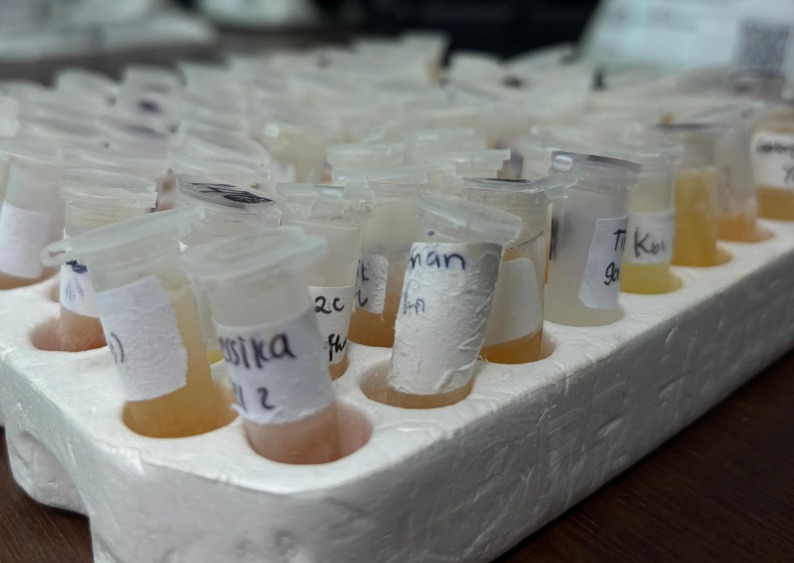
Parking attendants are considered an occupational group at risk of exposure to environmental pollutants, including lead. Lead can enter the body through inhalation, ingestion, dermal contact, and ocular exposure. Chronic accumulation of heavy metals such as lead may induce hepatocellular damage, which can be reflected by increased serum glutamic pyruvic transaminase (SGPT) levels, a biochemical marker of liver injury. Elevated blood lead levels have been associated with hepatotoxic effects in several studies. This study aimed to analyze the correlation between blood lead levels and SGPT levels among parking attendants in Kuanino Subdistrict, Kota Raja District, Kupang City. An analytical observational study with a cross-sectional design was conducted using purposive sampling. Ten parking attendants were recruited. Data were obtained through interviews and laboratory examinations measuring blood lead levels and SGPT concentrations. The results showed that blood lead levels ranged from 29 µg/dL to 111 µg/dL, with a mean of 75,5 µg/dL, indicating markedly elevated levels compared to recommended safety thresholds and suggesting potential clinical risk. SGPT levels ranged from 10,2 U/L to 33,1 U/L, with a mean of 21,54 U/L. Pearson correlation analysis demonstrated no statistically significant correlation between blood lead levels and SGPT levels (p = 0,331). Future studies involving a larger sample size and additional liver function indicators are warranted to clarify this finding.
References
Ardillah, Y. (2016). Faktor Risiko Kandungan Timbal di Dalam Darah. Jurnal Ilmu Kesehatan Masyarakat, 7(3), 150-155. https://doi.org/10.26553/jikm.2016.7.3.150-155
Aryasa, I. W. T., & Cahyaningrum, P. L. (2021). Analisis Kadar Timbal (Pb) dan Serum Glutamic Pyruvic Transaminase (SGPT) pada Pengemudi Ojek Online di Kota Denpasar, Bali. The Journal of Muhammadiyah Medical Laboratory Technologist, 4(2), 170-180. https://doi.org/10.30651/jmlt.v4i2.7815
Belsty, T., Nebiyu, W., & Legesse, M. (2023). The Toxicological Effect of Lead on Liver Histology and Biochemical Parameters: a Systematic Review. Journal of Liver Disease and Transplantation, 12(1). https://doi.org/10.%204172/2325-9612.1000216
Devitria, R., Sepryani, H., & Putri, E. M. D. (2016). Identifikasi Timbal pada Urin Tukang Parkir yang Bekerja di Pasar Pusat Pekanbaru. Jurnal sains dan teknologi laboratorium medik, 1(2), 23-29. DOI: 10.52071/jstlm.v1i2.11
Farihatun, A., Siti, E., Janah, N., Dewi, Y., & Edhiatmi, K. M. (2020). SGPT Levels (Serum Glutamic Pyruvat Transaminase) on Pil KB Contraception Acceptors. Jur Kes STIKes Mu Cis, 7(2), 39-43. https://doi.org/10.52221/jurkes.v7i2.93
Fidiyatun, F., Setiani, O., & Suhartono, S. (2013). Hubungan Kadar Pb dalam Darah dengan Kejadian Gangguan Fungsi Hati pada Pekerja Peleburan Timah Hitam di Kabupaten Tegal. Jurnal Kesehatan Lingkungan Indonesia, 12(2), 149-153. https://doi.org/10.14710/jkli.12.2.149%20-%20153
Firoozichahak, A., Rahimnejad, S., Rahmani, A., Parvizimehr, A., Aghaei, A., & Rahimpoor, R. (2022). Effect of Occupational Exposure to Lead on Serum Levels of Lipid Profile and Liver Enzymes: an Occupational Cohort Study. Toxicology reports, 9, 269-275. https://doi.org/10.1016/j.toxrep.2022.02.009
Flora, G., Gupta, D., & Tiwari, A. (2012). Toxicity of Lead: a Review with Recent Updates. Interdisciplinary toxicology, 5(2), 47-58. https://doi.org/10.2478/v10102-012-0009-2
Hikmah, A. M. (2024). Analisis Tingkat Pengetahuan Keracunan Timbal (Pb) dan Karbon Monoksida (CO) dengan Kadar Hemoglobin pada Pekerja Luar Ruangan. Jurnal Kesehatan Amanah, 8(2), 62-70. https://doi.org/10.57214/jka.v8i2.656
Kustiningsih, Y., Fitriyanti, N., & Nurlailah, N. (2017). Kadar Logam Timbal (Pb) dalam Darah Penjual Klepon. Medical Laboratory Technology Journal, 3(2), 47-52. https://doi.org/10.31964/mltj.v3i2.168
Nasir, M. (2019). Spektrofotometri Serapan Atom. Syiah Kuala University Press. Retrieved from: https://uskpress.usk.ac.id/spektrometri-serapan-atom-m-nasir/
Purwoko, D., & Prastiwi, D. E. (2019). Pengaruh Lokasi dan Waktu Pengukuran Sumber Bergerak (Kendaraan) Dengan Kandungan Timbal (Pb) pada Udara Underpass di Simpang Lima Mandai Kota Makassar. Sulolipu: Media Komunikasi Sivitas Akademika dan Masyarakat, 17(2), 39-47. DOI: 10.32382/sulolipu.v17i2.825
Putri, M. P., Purnadianti, M., Prodyanatasari, A., Agustina, N., & Nelson, A. D. (2024). Hubungan Kadar Timbal (Pb) dengan Kadar hemoglobin (Hb) dalam Sampel Darah Petugas Sampah TPS Bandar Lor Kota Kediri. Jurnal Wiyata: Penelitian Sains dan Kesehatan, 11(2), 137-142. https://doi.org/10.56710/wiyata.v11i2.826
Rachmawati, N., Anliza, S., Hilya, H., Lestari, S. I., & Novita, N. (2020). Penentuan Kadar Logam Timbal pada Rambut Supir Bus Rute Tangerang-Padang-Surabaya-Yogyakarata di Terminal Poris Tangerang. JPP (Jurnal Kesehatan Poltekkes Palembang), 15(2), 73-79. https://doi.org/10.36086/jpp.v15i2.531
Rosita, B., & Widiarti, L. (2018). Hubungan Toksisitas Timbal (Pb) Dalam Darah dengan Hemoglobin Pekerja Pengecatan Motor Pekanbaru. Prosiding Seminar Kesehatan Perintis, 1(1). https://jurnalupertis.com/index.php/PSKP/article/view/64
Sumba, I. H. (2019). Analisis Kadar Logam Timbal (Pb) dalam Darah Petugas Stasiun Pengisian Bensin Umum (SPBU) Kelurahan Oesapa Kota Kupang. (DIII) Karya Tulis Ilmiah, Poltekkes Kemenkes Kupang. Retrieved from: http://repository.poltekeskupang.ac.id/id/eprint/1883
Susanto, Z. A., Marsudi, L. O., & Irwadi, D. (2021). Penyuluhan Kesehatan dan Pemeriksaan Kadar Hemoglobin pada Penyapu Jalanan. Jurnal Pengabdian Masyarakat Teknologi Laboratorium Medik Borneo, 1(1), 21-24. https://doi.org/10.35728/abd_mlt.v1i1.830
Tasya, Z. (2018). Analisis Paparan Timbal (PB) pada Petugas Stasiun Pengisian Bensin Umum (SPBU) CV. Arba di Kota Palu. Media Publikasi Promosi Kesehatan Indonesia (MPPKI), 1(3), 118-124. https://doi.org/10.56338/mppki.v1i3.315
Yang, C., Li, Y., Ding, R., Xing, H., Wang, R., & Zhang, M. (2022). Lead Exposure as a Causative Factor for Metabolic Associated Fatty Liver Disease (MAFLD) and a Lead Exposure Related Nomogram for MAFLD Prevalence. Frontiers in public health, 10, 1000403. https://doi.org/10.3389/fpubh.2022.1000403
Downloads
Published
How to Cite
Issue
Section
License
Copyright (c) 2026 Laboratory Journal of Infectious Diseases

This work is licensed under a Creative Commons Attribution-ShareAlike 4.0 International License.