Complementary Antenatal Education Reduces Anxiety and Pain in Primigravidas: A Quasi-Experimental Study

Downloads
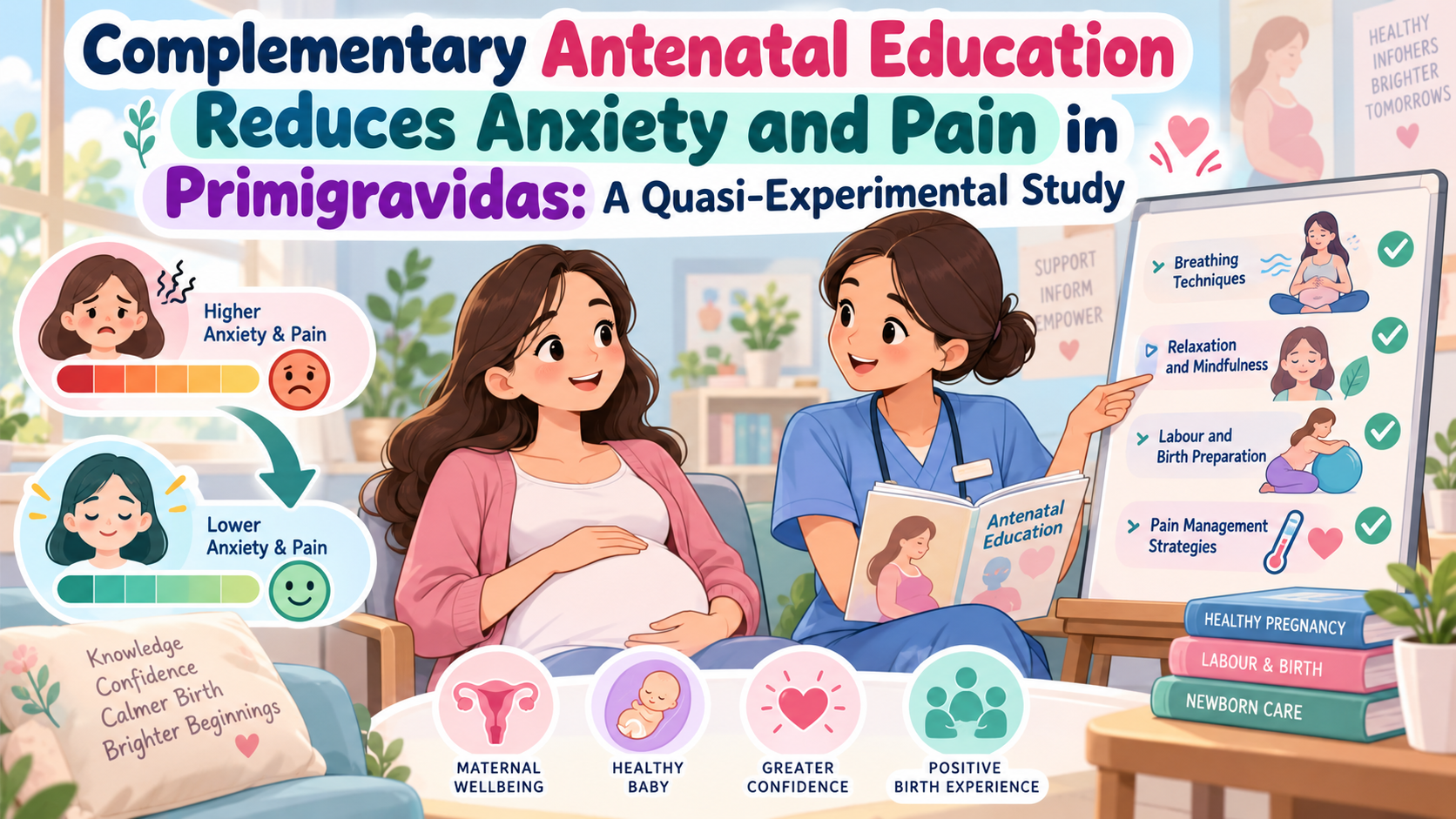
First pregnancy pregnant women usually have high anxiety and fear of pain of delivery which affects the outcome of the pregnancy and neonates negatively. Complementary antenatal education program using mind body approach along with other non pharmacological approaches to pain relief is recommended in midwifery practice in Indonesia. The objective of this study was to determine the effect of complementary antenatal education program on anxiety during pregnancy and level of labor pain in primigravida women. Quasi-experimental, non-equivalent control group pretest-posttest design has been used as research design. Research participants were 80 healthy primigravidas attending antenatal care at two primary health-care centers in Indonesia. Experimental group consisted of 40 patients who attended 4 sessions of complementary antenatal education (breathing and relaxation training, yoga stretching exercises, massage and touch techniques, aromatherapy counseling) and antenatal education as usual and control group consisted of 40 women attending antenatal education as usual. Pregnancy-related anxiety level was assessed using pregnancy-related anxiety scale while labor pain was estimated using 0-10 Numeric Rating Scale. Statistical analysis was performed using paired and independent t-test, chi-square test.
Alizadeh-Dibazari, Z., Abdolalipour, S., & Mirghafourvand, M. (2023). The effect of prenatal education on fear of childbirth, pain intensity during labour and childbirth experience: a scoping review using systematic approach and meta-analysis. BMC pregnancy and childbirth, 23(1), 541. https://doi.org/10.1186/s12884-023-05867-0
Bachtiar, E. Y., Novika, R. G. H., Murti, B., Pamungkasari, E. P., & Rahardjo, S. S. (2025). Determinants of Low Birth Weight at Dr. Moewardi Hospital, Surakarta, Central Java, Indonesia. Journal of Maternal and Child Health, 10(6), 383-398. https://doi.org/10.26911/thejmch.2025.10.06.05.
Bushra, Natasha, Ahmad Zunair Wasim, Jamshid Feroze, and Maria Masood. 2021. “Pattern of Anemia among Primigravida Attending the Antenatal Clinic of Tertiary Care Hospital.” Esculapio 16 (4 (oct 2020-dec 2020)). https://doi.org/10.51273/esc20.2516420.
Choironi, Emi Azmi, Yanasta Yudo Pratama, Kahaya Ainin Asya, Muhammad Luthfi Adnan, Titik Kuntari, Hamza Sameeh Abu Hilail, and Abd El Qader. 2025. “Maternal Factors Associated with Low Birth Weight Infants.” JHeS (Journal of Health Studies) 9 (2): 88–97. https://doi.org/10.31101/jhes.3976.
Damayanti, E., & Astuti, D. A. (2024). Peer counselor as a preventive effort against early marriage using the health belief model approach. Buletin Ilmu Kebidanan Dan Keperawatan, 3(03), 108-120. https://doi.org/10.56741/bikk.v3i03.671.
Efendi, D. F., Ferina, F., Fajrin, A. M., & Sriyanti, C. (2025). Continuity Of Midwifery Care In Mrs. V By Applying Prenatal Yoga To Reduce Anxiety About Child Birth. Journal of Midwifery and Reproductive Health, 33-44. https://doi.org/10.34035/jmrh.v2i2.1946.
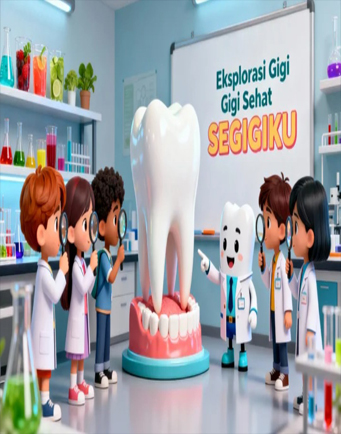
El-Kader, A. I. A., Hagrass, S. A. A., & Hassan, M. A. (2025). Maternal and Neonatal Outcomes for Egyptian Primigravida Women after Antenatal Dental Health Education Program. Women's health reports (New Rochelle, N.Y.), 6(1), 671–680. https://doi.org/10.1089/whr.2024.0133
Firouzbakht, M., Nikpour, M., Khefri, S., Jamali, B., Kazeminavaee, F., & Didehdar, M. (2015). The Effectiveness of Prenatal Intervention on Pain and Anxiety during the Process of Childbirth-Northern Iran: Clinical Trial Study. Annals of medical and health sciences research, 5(5), 348–352. https://doi.org/10.4103/2141-9248.165260
Fitri, Aisyah Nur, Misrawati Misrawati, Erika Erika, and Haliza Hasan. 2025. “Effectiveness of Mindfulness-Based Audio-Visual Interventions on Self-Efficacy in Childbirth Readiness among High-Risk Pregnant Women.” The Journal of Palembang Nursing Studies 4 (3): 143–50. https://doi.org/10.55048/jpns189.
Huang, Y., Zhong, Y., Chen, Q., Zhou, J., Fu, B., Deng, Y., Tu, X., & Wu, Y. (2024). A comparison of childbirth self-efficacy, fear of childbirth, and labor pain intensity between primiparas and multiparas during the latent phase of labor: a cross-sectional study. BMC pregnancy and childbirth, 24(1), 400. https://doi.org/10.1186/s12884-024-06571-3.
Lennie, S. C., Vale, L., Teare, M. D., Vinogradov, R., & Heslehurst, N. (2025). Exploring Pregnant Women's Perceptions and Experiences of Adiposity Measurements in Routine Antenatal Care: A Qualitative Study. Healthcare (Basel, Switzerland), 13(20), 2558. https://doi.org/10.3390/healthcare13202558
Liu, T., Luo, D., Li, Y., Li, J., Li, X., Zhang, L., Huang, L., Ma, H., Huang, B., & Xie, A. (2026). Psychological predictors of cesarean delivery on maternal request in upper middle-income settings and the mitigating role of prenatal psychological education: a multicenter longitudinal study. Frontiers in medicine, 12, 1683360. https://doi.org/10.3389/fmed.2025.1683360.
Mahoney, A., Shiner, C. T., Grierson, A. B., Sharrock, M. J., Loughnan, S. A., Harrison, V., & Millard, M. (2023). Online cognitive behaviour therapy for maternal antenatal and postnatal anxiety and depression in routine care. Journal of affective disorders, 338, 121–128. https://doi.org/10.1016/j.jad.2023.06.008.
Mazidi, M., Davies, E., Grafton, B., Moulds, M. L., Newby, J. M., & MacLeod, C. (2026). Repetitive negative thinking during pregnancy: The role of biased information seeking and negative prenatal expectations. Behaviour research and therapy, 198, 104981. https://doi.org/10.1016/j.brat.2026.104981.
Nainggolan, R., Wulandari, R., & Harahap, R. Y. (2022). The Influence of Health Education About Delivery on Primigravidal Anxiety Trimester III During the Covid-19 Pandemic in Aek Haruaya Village. International Journal of Public Health Excellence (IJPHE), 2(1), 302-7. https://doi.org/10.55299/ijphe.v1i2.114.
Nikoozad, S., Safdari-Dehcheshmeh, F., Sharifi, F., & Ganji, F. (2024). The effect of prenatal education on health anxiety of primigravid women. BMC pregnancy and childbirth, 24(1), 541. https://doi.org/10.1186/s12884-024-06718-2.
Nugroho, E., Nisa, A., Cahyati, N., & Najib, N. (2023). Perception, mental health, and social media exposure on adolescents in Indonesia during COVID-19 pandemic. J Pharm Pharmacogn Res, 11(3), 426-436. https://doi.org/10.56499/jppres22.1560_11.3.426.
Nurlaili, H., & Pertiwi, N. F. A. (2025). The Relationship between Training and Knowledge with Performance of Posyandu Cadres. Jurnal Ilmiah Kebidanan (The Journal Of Midwifery), 13(1), 1-6. https://doi.org/10.33992/jik.v13i1.3285.
Ramasamy, R., Christopher, L., & Rajendran, S. S. (2025). Impact of midwife-led antenatal care on childbirth outcomes and maternal satisfaction among low-risk mothers in India. Bioinformation, 21(12), 5000. https://doi.org/10.6026/973206300215000.
Rusmeni, N. P. D. A., Putra, I. D. G. A. A., & Imam, N. (2025). The Impact Of Deep Breathing Combined With Aromatherapy On Anxiety Levels In Pre-Caesarean Section Patients At Kertha Usada Hospital. Nurse and Holistic Care, 5(3), 315-323. https://doi.org/10.33086/nhc.v5i3.7764.
Sacharum, N. (2025). Effectiveness of Nutritional Counseling on Improving Dietary Compliance Among Pregnant Women. PROFESSIONAL HEALTH JOURNAL, 7(1), 394-401. https://doi.org/10.54832/phj.v7i1.1296.
Saragih, A. U., Arisman, Y., Aulia, U. K., & Yulanda, R. (2025). The Influence of Prenatal Classes on Anxiety in Primigravida Mothers. JURNAL KEBIDANAN KESTRA (JKK), 7(2). https://doi.org/10.35451/jkk.v7i2.2659.
Sari, I. P., & Puspitasari, A. I. (2025). The Influence of Anxiety Levels in Third Trimester Pregnant Women Through Health Education on Childbirth Preparation at the Marlina Clinic, Ciputat District, Tangerang Selatan City. MAHESA: Malahayati Health Student Journal, 5(3), 1009-1017. https://doi.org/10.33024/mahesa.v5i3.16791.
Suparni, S. B., Aisyah, R. D., & Pambudi, D. B. (2025). Optimalisasi Pemanfaatan Terapi Komplementer dalam Kehamilan. LINK, 21(1), 53-58. https://doi.org/10.31983/link.v21i1.12507.
Tian, Z., Zhang, H., & Chen, S. (2025). Intervention effects of subconscious cultivation in mindfulness-based physical education teaching and training on pain perception and psychological resilience in advanced cancer patients. Psycho-Oncologie, 19(4), 4670. https://doi.org/10.18282/po4670.
Widatiningsih, S., TD, C. H., & Handayani, E. (2025). Transforming Antenatal Education in the Digital Era: The Impact of a Hybrid Intervention in Pregnant Women’s Behavior. Media Publikasi Promosi Kesehatan Indonesia (MPPKI), 8(10), 1181-1190. https://doi.org/10.56338/mppki.v8i10.7973.
Wulandari, R. D., Laksono, A. D., & Rohmah, N. (2021). Antenatal care visits performance among unmarried women in Indonesia: Does unintended pregnancy matter? A cross-sectional study. F1000Research, 10(1270), 1270. https://doi.org/10.12688/f1000research.24693.1.
Zaman, A., Fadlalmola, H. A., Ibrahem, S. E., Ismail, F. H., Abedelwahed, H. H., Ali, A. M., Abdelgadim, N. H., Mustafa, A. M. A., Ahmed, I. H., Ahmed, N. M., Eltyeb, A. A., Gaafar, D. A., Alnassry, S. M., Adam, A. A., Yasin, N. S., Ali, R. A., Fadlalla, A. A., Eltayeb, A. E., & Saad, A. M. (2025). The role of antenatal education on maternal self-efficacy, fear of childbirth, and birth outcomes: A systematic review and meta-analysis. European journal of midwifery, 9, 10.18332/ejm/200747. https://doi.org/10.18332/ejm/200747.
Copyright (c) 2026 JURNAL INFO KESEHATAN

This work is licensed under a Creative Commons Attribution-NonCommercial-ShareAlike 4.0 International License.
Copyright notice
Ownership of copyright
The copyright in this website and the material on this website (including without limitation the text, computer code, artwork, photographs, images, music, audio material, video material and audio-visual material on this website) is owned by JURNAL INFO KESEHATAN and its licensors.
Copyright license
JURNAL INFO KESEHATAN grants to you a worldwide non-exclusive royalty-free revocable license to:
- view this website and the material on this website on a computer or mobile device via a web browser;
- copy and store this website and the material on this website in your web browser cache memory; and
- print pages from this website for your use.
- All articles published by JURNAL INFO KESEHATAN are licensed under the Creative Commons Attribution 4.0 International License. This permits anyone to copy, redistribute, remix, transmit and adapt the work provided the original work and source is appropriately cited.
JURNAL INFO KESEHATAN does not grant you any other rights in relation to this website or the material on this website. In other words, all other rights are reserved.
For the avoidance of doubt, you must not adapt, edit, change, transform, publish, republish, distribute, redistribute, broadcast, rebroadcast or show or play in public this website or the material on this website (in any form or media) without appropriately and conspicuously citing the original work and source or JURNAL INFO KESEHATAN prior written permission.
Permissions
You may request permission to use the copyright materials on this website by writing to [email protected].
Enforcement of copyright
JURNAL INFO KESEHATAN takes the protection of its copyright very seriously.
If JURNAL INFO KESEHATAN discovers that you have used its copyright materials in contravention of the license above, JURNAL INFO KESEHATAN may bring legal proceedings against you seeking monetary damages and an injunction to stop you using those materials. You could also be ordered to pay legal costs.
If you become aware of any use of JURNAL INFO KESEHATAN copyright materials that contravenes or may contravene the license above, please report this by email to [email protected]
Infringing material
If you become aware of any material on the website that you believe infringes your or any other person's copyright, please report this by email to [email protected].