Healthcare Support Related to Family Awareness Efforts Towards The Risk of Stunting in Children

Downloads
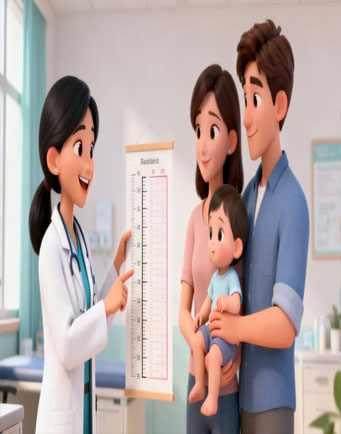
Preventing stunting necessitates collaborative efforts from multiple stakeholders, with the family being the most pertinent social unit in guaranteeing adequate nutrition for children. The study aimed to examine the correlation between healthcare supports and family efforts in raising awareness about the risk of stunting in young children. This study used a cross-sectional survey that examined family characteristics and various efforts to prevent stunting in children within the community. In addition, the study investigated healthcare support and family awareness. A total of 200 mothers from families with stunted children participated in the study. Data were collected using questionnaires and analyzed descriptively. Rank Spearman Correlation was used to investigate the correlation between healthcare worker support and the behaviors of mothers of toddlers with stunting before marriage, during pregnancy, and while breastfeeding. The average age of mothers was 29.6 years, with the youngest being 20 and the oldest 46 years. The majority of the mothers had a high school education, were housewives, came from nuclear families, had access to clean drinking water, lived in clean and well-maintained homes, and had incomes below the regional minimum wage. Efforts to prevent stunting were fair before pregnancy, during pregnancy, and while breastfeeding. Most of the support from healthcare workers in preventing stunting were classified as good. The analysis results indicate a significant positive relationship between healthcare worker support and the behaviours of mothers of toddlers with stunting, both before marriage and while breastfeeding (p<0.05). Our findings revealed that stunting was observed in families of productive age, with high school education, nuclear family structures, and low economic income below the regional minimum wage. Preventive efforts have been made since before marriage, during pregnancy, and while breastfeeding, but have not been fully optimized. Support from healthcare workers must be continually improved to meet the healthcare needs of families in an effort to prevent stunting in children.
Andrews, N. C. (1999). Disorders of Iron Metabolism. New England Journal of Medicine, 341(26), 1986–1995. https://doi.org/10.1056/NEJM199912233412607
Andriyani, S., & Werdani, K. E. (2021). Hubungan Efikasi Diri dengan Sikap Kader Nasyiatul Aisyiyah terhadap Program STOP Stunting di Kabupaten Boyolali. Jurnal Kesehatan Masyarakat Indonesia, 16(4), 212. https://doi.org/10.26714/jkmi.16.4.2021.212-217
Aulia, Puspitasari, D. I., Huzaimah, N., Wardita, Y., & Sandi, A. P. (2017). Stunting dan Faktor Ibu (pendidikan, pengetahuan gizi, pola asuh, dan self efikasi). Journal of Health Science Research, 2(1), 1–9. https://doi.org/10.24929/jik.v6i1.1498
Berhe, K., Seid, O., Gebremariam, Y., Berhe, A., & Etsay, N. (2019). Risk factors of stunting (chronic undernutrition) of children aged 6 to 24 months in Mekelle City, Tigray Region, North Ethiopia: An unmatched case-control study. Plos One, 14(6), e0217736. https://doi.org/10.1371/journal.pone.0217736
Biro Komunikasi dan Pelayanan Masyarakat. (2022). Upaya Ibu Cegah Anak Stunting dan Obesitas. Jakarta: Biro Komunikasi dan Pelayanan Masyarakat.
Budiastutik, I., & Rahfiludin, M. Z. (2019). Faktor Risiko Stunting pada anak di Negara Berkembang. Amerta Nutrition, 3(3), 122. https://doi.org/10.20473/amnt.v3i3.2019.122-129
Bukit, D. S., Keloko, A. B., & Ashar, T. (2021). Dukungan Tenaga Kesehatan dalam Pencegahan Stunting di Desa Tuntungan 2 Kabupaten Deli Serdang. Tropical Public Health Journal, 1(2), 67–71. https://doi.org/10.32734/trophico.v1i2.7264
César-Santos, B., Bastos, F., Dias, A., & Campos, M. J. (2024). Family Nursing Care during the Transition to Parenthood: A Scoping Review. Healthcare, 12(5), 515. https://doi.org/10.3390/healthcare12050515
Dinas Kesehatan Provinsi Bali. (2023). Profil Kesehatan Provinsi Bali Tahun 2022. Denpasar: Dinas Kesehatan Provinsi Bali.
Elizar, E., Prihatin, N. S., Nurmila, N., & Jasmiati, J. (2022). Hubungan Peran Petugas Kesehatan Dan Sikap Remaja Dengan Kepatuhan Konsumsi Tablet Fe Di Dayah Terpadu Al-Madinatuddiniyah Syamsuddhuha. Indonesian Trust Health Journal, 5(2), 72–77. https://doi.org/10.37104/ithj.v5i2.112
Fildzah, F. K., Yamin, A., & Hendrawati, S. (2020). Perilaku Ibu Dalam Pencegahan Stunting Pada BADUTA. Jurnal Keperawatan Muhammadiyah, 5(2), 272–284. https://doi.org/10.30651/jkm.v5i2.3352
Fujiana, F., Asroruddin, M., Nurmainah, N., Arundina, A., Wahyudi, T., Windarti, W., Lestari, D., Chairunisa, T. S., Eulalia, N., & Kafaso, V. P. T. (2023). Cegah Stunting melalui Edukasi Pra Nikah. Jurnal Kreativitas Pengabdian Kepada Masyarakat (PKM), 6(2), 517–525. https://doi.org/10.33024/jkpm.v6i2.8295
Glorieux, F. H., & Pettifor, J. M. (2014). Vitamin D/dietary calcium deficiency rickets and pseudo-vitamin D deficiency rickets. BoneKEy Reports, 3. https://doi.org/10.1038/bonekey.2014.19
Harahap, H., Syam, A., Palutturi, S., Syafar, M., Hadi, A. J., Ahmad, H., Sani, H. A., & Mallongi, A. (2024). Stunting and Family Socio-Cultural Determinant Factors: A Systematic Review. Pharmacognosy Journal, 16(1), 268–275. https://doi.org/10.5530/pj.2024.16.39
Harmatz, P., Butensky, E., & Lubin, B. (2003). Nutrion in pediatrics basic science and clinical application. London: Churchill Livingstone.
Hermawan, D., Abidin, Z., & Yanti, D. (2020). Konsumsi sayuran hijau dengan kejadian anemia pada ibu hamil. Holistik Jurnal Kesehatan, 14(1), 149–154. https://doi.org/10.33024/hjk.v14i1.1557
Hubaedah, A., & Andarwulan, S. (2020). Provision of Additional Food as an Effort to Handling Stunting in Children in Siwalankerto District Surabaya. Basic and Applied Nursing Research Journal, 1(2), 25–28. https://doi.org/10.11594/banrj.01.02.01
Kurniasari, Y., Juffrie, M., Sitaresmi, M. N., & Jamil, M. D. (2016). Kadar kalsium serum pada anak stunting dan tidak stunting usia 24-59 bulan. Jurnal Gizi Klinik Indonesia, 12(3), 108. https://doi.org/10.22146/ijcn.23109
Likhar, A., & Patil, M. S. (2022). Importance of Maternal Nutrition in the First 1,000 Days of Life and Its Effects on Child Development: A Narrative Review. Cureus. https://doi.org/10.7759/cureus.30083
Mirayanti, N. K. A., & Juanamasta, I. G. (2020). Knowledge and attitude of Mothers about Stunting in Banjar Pengukuh Peguyangan Kangin Village Denpasar. Jurnal Ners Dan Kebidanan (Journal of Ners and Midwifery), 7(3), 320–325. https://doi.org/10.26699/jnk.v7i3.ART.p320-325
Nurvitriana, N. C., & Andarwulan, S. (2021). The Effect of the Emotional Demonstration Method of Mealing Schedule on the Knowledge of Mothers to Children in Posyandu V Mulyorejo Surabaya. Basic and Applied Nursing Research Journal, 2(1), 17–21. https://doi.org/10.11594/banrj.02.01.04
Oktarina, C., Dilantika, C., Sitorus, N. L., & Basrowi, R. W. (2024). Relationship Between Iron Deficiency Anemia and Stunting in Pediatric Populations in Developing Countries: A Systematic Review and Meta-Analysis. Children, 11(10), 1268. https://doi.org/10.3390/children11101268
Pudjirahaju, A., Soelistyorini, D., Mustafa, A., & Kristianto, Y. (2025). Intervensi Gizi Spesifik pada 1000 Hari Pertama Kehidupan oleh Agen Perubahan untuk Mencegah Stunting, Meningkatkan Perkembangan dan IQ Anak di Kabupaten Trenggalek. Amerta Nutrition, 9(1), 101–108. https://doi.org/10.20473/amnt.v9i1.2025.101-108
Purkiewicz, A., Regin, K. J., Mumtaz, W., & Pietrzak-Fiećko, R. (2025). Breastfeeding: The Multifaceted Impact on Child Development and Maternal Well-Being. Nutrients, 17(8), 1326. https://doi.org/10.3390/nu17081326
Putra, M., Rekawati, E., Permatasari, H., & Sari, I. (2024). Empowering Community Health Worker to Reduce Stunting Among Toddlers: Systematic Review. Jitek, 11(2), 187-196. https://doi.org/10.32668/jitek.v11i2.1462
Rahmah, A. A., Yani, D. I., Eriyani, T., & Rahayuwati, L. (2023). Hubungan Pendidikan Ibu Dan Keterpaparan Informasi Stunting Dengan Pengetahuan Ibu Tentang Stunting. Journal of Nursing Care, 6(1), 1–10.
Rahmayana, R., Anwar Ibrahim, I., & Damayati, D. S. (1970). Hubungan Pola Asuh Ibu Dengan Kejadian Stunting Anak Usia 24-59 Bulan Di Posyandu Asoka II Wilayah Pesisir Kelurahan Barombong Kecamatan Tamalate Kota Makassar Tahun 2014. Al-Sihah: The Public Health Science Journal, 6(2), 424-436.
Raiten, D. J., & Bremer, A. A. (2020). Exploring the Nutritional Ecology of Stunting: New Approaches to an Old Problem. Nutrients, 12(2), 371. https://doi.org/10.3390/nu12020371
Reviani, N., Amira Oktaria, S., Syefi Febriyanti, M., Rahayu Samaria, A., Yulanda, B., Jutan Sanjaya, S., & Harlim, A. (2025). Education of Adolescents about Anemia and Reproductive Health as A Stunting Prevention Effort. International Journal of Community Service, 5(1), 25–29. https://doi.org/10.51601/ijcs.v5i1.829
Rus’an, R., & Hamzah, H. (2019). Pendidikan Pranikah Berbasis Keluarga Pada Remaja Putri di Kecamatan Dampal Selatan. Scolae: Journal of Pedagogy, 2(2), 263–275. https://doi.org/10.56488/scolae.v2i2.54
Salamung, N., Haryanto, J., & Sustini, F. (2019). Faktor-Faktor yang Berhubungan dengan Perilaku Pencegahan Stunting pada Saat Ibu Hamil di Wilayah Kerja Puskesmas Kabupaten Bondowoso. Jurnal Penelitian Kesehatan “SUARA FORIKES” (Journal of Health Research “Forikes Voice”), 10(4), 264. https://doi.org/10.33846/sf10404
Simbolon, D. (2019). Pencegahan Stunting Melalui Intervensi Gizi Spesifik Pada Ibu menyusui Anak Usia 0-24 Bulan. Surabaya: Media Sahabat Cendekia.
Tan, M. L., Foong, S. C., Ho, J. J., Foong, W. C., Mohd, R., & Harun, Z. (2020). Postpartum women’s perception of antenatal breastfeeding education: a descriptive survey. International Breastfeeding Journal, 15(1), 85. https://doi.org/10.1186/s13006-020-00328-2
Tyarini, I. A., Setiawati, A., Rahagia, R., & Maidelwita, Y. (2024). Community empowerment in stunting prevention and control to build a healthy and productive generation. Jurnal Pengabdian Masyarakat Edukasi Indonesia, 1(3), 100–106. https://doi.org/10.61099/jpmei.v1i3.56
Utami, M. M. H., Kustiyah, L., & Dwiriani, C. M. (2023). Risk Factors of Stunting, Iron Deficiency Anemia, and Their Coexistence among Children Aged 6-9 Years in Indonesia: Results from the Indonesian Family Life Survey-5 (IFLS-5) in 2014-2015. Amerta Nutrition, 7(1), 120–130. https://doi.org/10.20473/amnt.v7i1.2023.120-130
Wardana, A. K., & Astuti, I. W. (2019). Penyuluhan pencegahan stunting pada anak (stunting prevention expansion in children). Jurnal Berdaya Mandiri, 1(2), 170–176. https://doi.org/10.31316/jbm.v1i2.642
Yani, D. I., Rahayuwati, L., Sari, C. W. M., Komariah, M., & Fauziah, S. R. (2023). Family Household Characteristics and Stunting: An Update Scoping Review. Nutrients, 15(1), 233. https://doi.org/10.3390/nu15010233
Yasa, I. D. P. G. P., Rahayu, V. E. S., & Rasdini, I. G. A. A. (2023). Perception and Educational Needs in the Self-Management Type 2 Diabetes Mellitus Patients: A Phenomenological Study Based on Local Wisdom. Jurnal Info Kesehatan, 21(4), 804–814. https://doi.org/10.31965/infokes.Vol21.Iss4.1340
Yoto, M., Laksono, A. D., Devy, S. R., Luthviatin, N., Nafikadini, I., Nandini, N., & Widyaningtyas, N. H. (2025). Encouraging Healthcare Childbirth to Increase Exclusive Breastfeeding: Evidence from Madurese, Indonesia. Amerta Nutrition, 9(1), 45–54. https://doi.org/10.20473/amnt.v9i1.2025.45-54
Copyright (c) 2026 JURNAL INFO KESEHATAN

This work is licensed under a Creative Commons Attribution-NonCommercial-ShareAlike 4.0 International License.
Copyright notice
Ownership of copyright
The copyright in this website and the material on this website (including without limitation the text, computer code, artwork, photographs, images, music, audio material, video material and audio-visual material on this website) is owned by JURNAL INFO KESEHATAN and its licensors.
Copyright license
JURNAL INFO KESEHATAN grants to you a worldwide non-exclusive royalty-free revocable license to:
- view this website and the material on this website on a computer or mobile device via a web browser;
- copy and store this website and the material on this website in your web browser cache memory; and
- print pages from this website for your use.
- All articles published by JURNAL INFO KESEHATAN are licensed under the Creative Commons Attribution 4.0 International License. This permits anyone to copy, redistribute, remix, transmit and adapt the work provided the original work and source is appropriately cited.
JURNAL INFO KESEHATAN does not grant you any other rights in relation to this website or the material on this website. In other words, all other rights are reserved.
For the avoidance of doubt, you must not adapt, edit, change, transform, publish, republish, distribute, redistribute, broadcast, rebroadcast or show or play in public this website or the material on this website (in any form or media) without appropriately and conspicuously citing the original work and source or JURNAL INFO KESEHATAN prior written permission.
Permissions
You may request permission to use the copyright materials on this website by writing to [email protected].
Enforcement of copyright
JURNAL INFO KESEHATAN takes the protection of its copyright very seriously.
If JURNAL INFO KESEHATAN discovers that you have used its copyright materials in contravention of the license above, JURNAL INFO KESEHATAN may bring legal proceedings against you seeking monetary damages and an injunction to stop you using those materials. You could also be ordered to pay legal costs.
If you become aware of any use of JURNAL INFO KESEHATAN copyright materials that contravenes or may contravene the license above, please report this by email to [email protected]
Infringing material
If you become aware of any material on the website that you believe infringes your or any other person's copyright, please report this by email to [email protected].