Antifungal Activity of Ceiba pentandra (L.) Gaertn. Ethanolic Leaf Extract Against Candida albicans

Downloads
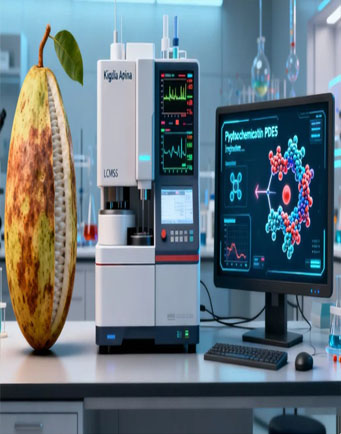
As an opportunistic fungal pathogen, Candida albicans remains a leading cause of a wide range of human infections. rise in clinical resistance to conventional synthetic antifungal agents has prompted the search for novel therapeutic compounds derived from medicinal plants. Among these botanical candidates, Ceiba pentandra (L.) Gaertn. is known to contain bioactive secondary metabolites with documented antimicrobial properties. This study aimed to characterize the phytochemical composition of the C. pentandra ethanolic leaf extract and assess its antifungal activity against C. albicans. Active constituents were isolated using ethanolic maceration, and comprehensive phytochemical screening was conducted to identify the predominant classes of secondary metabolites. The extract's antifungal activity was evaluated using the agar-well diffusion method at concentrations of 400, 600, and 800 ppm. Nystatin (100 ppm) and dimethyl sulfoxide (DMSO) served as the positive and negative controls, respectively. Inhibition-zone diameters were statistically analyzed using one-way analysis of variance (ANOVA). Screening confirmed the presence of flavonoids, phenolics, alkaloids, and terpenoids in the extract. The ethanolic leaf extract of Ceiba pentandra exhibited moderate antifungal activity against Candida albicans. Although the inhibition-zone diameter increased from 400 to 800 ppm, the differences were not statistically significant (p > 0.05). These findings indicate antifungal activity within the tested concentration range and support further investigation across a broader concentration range and using more specific bioassays
Bhattacharya, S., Sae-tia, S., & Fries, B. C. (2020). Candidiasis and Mechanisms of Antifungal Resistance. Antibiotics, 9(312), 1–19. https://doi.org/doi:10.3390/antibiotics9060312
Bongomin F. (2025). Recognizing the Importance of Public Health Mycology. Life (Basel, Switzerland), 15(2), 145. https://doi.org/10.3390/life15020145
Dalhatu, A. S., Imam, T. S., Namadina, M. M., Sani, Z. M., & Muhammad, Y. Y. (2020). Metabolic Profile Assessment Of Phytochemicals In Ceiba Pentandra (L.) Gaertn, From Zaria City, Nigeria. FUDMA Journal of Sciences (FJS), 4(3), 426–436. https://doi.org/10.33003/fjs-2020-0403-410
Donga, S., & Movalia, J. (2023). Antibacterial and antifungal activity of seed extracts of Ceiba pentandra ( L .) Gaertn . extracted by traditional and modern extraction methods. International Journal of Agricultural Sciences, 19(1), 102–109. https://doi.org/10.15740/HAS/IJAS/19
Gómez-gaviria, M., Baruch-martínez, D. A., & Mora-montes, H. M. (2025). Natural Source-Derived Compounds with Antifungal Activity Against Medically Relevant Fungi. Infection and Drug Resistance, 8(December), 6389–6406. https://doi.org/https://doi.org/10.2147/IDR.S554647
Haryono, S. E., Aditiyarini, D., & Restiani, R. (2024). Analysis of secondary metabolites and antioxidant activities of ethanol extract of Dendrophthoe pentandra ( L .) Miq .) in Sapuran , Central Java. Biogenesis, 12(1), 56–65. https://doi.org/https://doi.org/10.24252/bio.v12i1.40323
Hasyim, D. M., Anurogo, D., Bansaleng, Y. F., Hiola, S. F., & Anrip, N. (2025). Potential of Medicinal Plants in Indonesian Forest Biodiversity Conservation in Synergy with Pharmaceutical Technology for Modern Medicine. International Journal of Engineering, Science and Information Technology, 5(3), 200–207. https://doi.org/https://doi.org/10.52088/ijesty.v5i3.899
Hernández-Figueroa, R. H., Mani-López, E., López-Malo, A., Palou, E., Cid-Pérez, T. S., Nevárez-Moorillón, G. V., & Avila-Sosa, R. (2025). Antifungal efficacy of thyme essential oil : a multi-model approach to growth inhibition. Frontiers in Sustainable Food System, (May). https://doi.org/10.3389/fsufs.2025.1535812
Hlatshwayo, S., Thembane, N., Babu, S., Krishna, N., Gqaleni, N., & Ngcobo, M. (2025). Extraction and Processing of Bioactive Phytoconstituents from Widely Used South African Medicinal Plants for the Preparation of Effective Traditional Herbal Medicine Products : A Narrative Review. Plants, 14(206), 1–32. https://doi.org/https://doi.org/10.3390/ plants14020206
Ivanov, M., ´Ciri´c, A., & Stojkovi´, D. (2022). Emerging Antifungal Targets and Strategies. International Journal of Molecular Sciences, 23(2756), 1–26. https://doi.org/https://doi.org/ 10.3390/ijms23052756
LembergID, C., Vicente, K. M. de S., Fro´is-Martins, R., Altmeier, S., Tran, V. D. T., Mertens, S., Amorim-Vaz, S., Laxmi Rai, S., D’Enfert, C., Pagni, M., Sanglard, D., & LeibundGut-Landmann, S. (2022). Candida albicans commensalism in the oral mucosa is favoured by limited virulence and metabolic adaptation. PLOS PATHOGENS, 1–33. https://doi.org/. https://doi.org/10.1371/journal. ppat.1010012
Medina, M. D. R., & Ruales, J. (2025). Essential Oils as an Antifungal Alternative for the Control of Various Species of Fungi Isolated from Musa paradisiaca : Part I. Microorganisms, 13(1827), 1–21. https://doi.org/https://doi.org/10.3390/ microorganisms13081827
Merico, B. J., Chigwechokha, P., & Gama Petulo Bandawe. (2023). Fungal infections through a One Health lens : an overlooked dimension of global health , with a focus on Africa. One Health Mycology, 123–133. https://doi.org/10.63049/OHM.25.22.3
Nosratzehi, T., Nosratzehi, M., Nosratzehi, S., & Lotf, F. (2019). The comparison of the effect of curcumin with nystatin on inhibition level of Candida albicans. Journal OfExperimental Pharmacology, 93–97. https://doi.org/http://doi.org/10.2147/JEP.S215843
Rabaan, A. A., Sulaiman, T., Al-Ahmed, S. H., Buhaliqah, Z. A., Buhaliqah, A. A., AlYuosof, B., Alfaresi, M., Fares, M. A. Al, Alwarthan, S., Alkathlan, M. S., Almaghrabi, R. S., Abuzaid, A. A., Altowaileb, J. A., Ibrahim, M. Al, AlSalman, E. M., Alsalman, F., Alghounaim, M., Bueid, A. S., Al-Omari, A., & Mohapatra, R. K. (2023). Potential Strategies to Control the Risk of Antifungal Resistance in Humans : A Comprehensive Review. Antibiotics, 12(608), 2–24. https://doi.org/https:// doi.org/10.3390/antibiotics12030608
Sari, D. K., Jeelani, G., Ilmi, H., Tumewu, L., Wahyuni, R., Widyawaruyanti, A., Nozaki, T., & Hafid, A. F. (2024). Therapeutic potential of Indonesian plant extracts in combating malaria and protozoan neglected tropical disease. BMC Complementary Medicine and Therapies, 24(416), 1–10. https://doi.org/https://doi.org/10.1186/s12906-024-04717-6
Silué, G. N. A., Belemlilga, M. B., Djadji, A. T. L., Traoré, K. T., Boly, G. A. L., Koala, M., Ouédraogo, N., Traoré, A., & Kouakou-Siransy, G. (2023). Anti-inflammatory and antioxidant activities assessment of an aqueous extract of Ceiba pentandra ( L .) Gaertn ( Malvaceae ). RPS Pharmacy and Pharmacology Reports, 2(November), 1–8. https://doi.org/https://doi.org/10.1093/rpsppr/rqad037
Silva, V. M. M. A., Silva, A. P. S. da, Cunha, R. X., Oliveira, J. R. S., Bezerra, L. F. G., & Lima, V. L. M. (2023). Genus Ceiba Mill . in Brazil : A comprehensive review on. Natural Resources for Human, 3(2), 259–276. https://doi.org/https://doi.org/10.53365/nrfhh/160949
Srb, N., Talapko, J., Meštrovi´, T., Fureš, R., Stupnišek, M., Srb, A. M., & Škrlec, I. (2025). A Comprehensive Overview of Candida albicans as the Leading Pathogen in Vulvovaginal Candidiasis. Journal of Fungi, 11(632), 1–20. https://doi.org/https://doi.org/10.3390/ jof11090632
Talapko, J., Juzbaši´c, M., Matijevi´, T., Pustijanac, E., Beki´, S., Kotris, I., & Škrlec, I. (2021). Candida albicans — The Virulence Factors and Clinical Manifestations of Infection. Journal of Fungi, 7(79), 1–19. https://doi.org/https://doi.org/10.3390/jof7020079
Wei, E., Chan, C., Yeong, S. W., Wong, C. W., Yoon, O., Soo, M., Choon, A., Phua, Y., & Ng, Y. K. (2023). Ceiba pentandra ( L .) Gaertn .: An overview of its botany , uses , reproductive biology , pharmacological properties , and industrial potentials. Journal of Applied Biology & Biotechnology, 11(1), 1–7. https://doi.org/10.7324/JABB.2023.110101
Wulandari, A., Hapsari, R., Mujahidah, Sari, D., Puspitasari, I., & Pramukarso, D. T. (2021). Antifungal susceptibility profile of Candida spp . causing candidemia in an Indonesian tertiary hospital. Journal of Clinical Microbiology and Infectious Diseases (JCMID, 1(2), 28–32. https://doi.org/10.51559/jcmid.v1i2.5
Copyright (c) 2026 JURNAL INFO KESEHATAN

This work is licensed under a Creative Commons Attribution-NonCommercial-ShareAlike 4.0 International License.
Copyright notice
Ownership of copyright
The copyright in this website and the material on this website (including without limitation the text, computer code, artwork, photographs, images, music, audio material, video material and audio-visual material on this website) is owned by JURNAL INFO KESEHATAN and its licensors.
Copyright license
JURNAL INFO KESEHATAN grants to you a worldwide non-exclusive royalty-free revocable license to:
- view this website and the material on this website on a computer or mobile device via a web browser;
- copy and store this website and the material on this website in your web browser cache memory; and
- print pages from this website for your use.
- All articles published by JURNAL INFO KESEHATAN are licensed under the Creative Commons Attribution 4.0 International License. This permits anyone to copy, redistribute, remix, transmit and adapt the work provided the original work and source is appropriately cited.
JURNAL INFO KESEHATAN does not grant you any other rights in relation to this website or the material on this website. In other words, all other rights are reserved.
For the avoidance of doubt, you must not adapt, edit, change, transform, publish, republish, distribute, redistribute, broadcast, rebroadcast or show or play in public this website or the material on this website (in any form or media) without appropriately and conspicuously citing the original work and source or JURNAL INFO KESEHATAN prior written permission.
Permissions
You may request permission to use the copyright materials on this website by writing to [email protected].
Enforcement of copyright
JURNAL INFO KESEHATAN takes the protection of its copyright very seriously.
If JURNAL INFO KESEHATAN discovers that you have used its copyright materials in contravention of the license above, JURNAL INFO KESEHATAN may bring legal proceedings against you seeking monetary damages and an injunction to stop you using those materials. You could also be ordered to pay legal costs.
If you become aware of any use of JURNAL INFO KESEHATAN copyright materials that contravenes or may contravene the license above, please report this by email to [email protected]
Infringing material
If you become aware of any material on the website that you believe infringes your or any other person's copyright, please report this by email to [email protected].