Factors Associated with Delays in Early Stroke Detection among Older Adults

Downloads
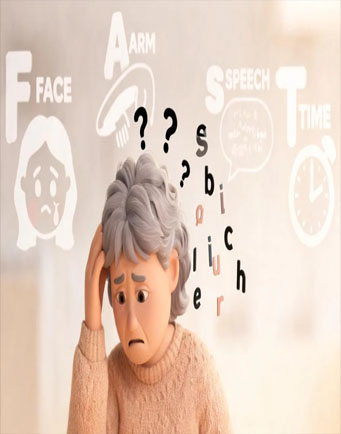
Stroke is a medical emergency caused by disrupted blood circulation to the brain, leading to rapid neurological dysfunction and potentially fatal outcomes if not treated promptly. Optimal management must be initiated within the first three hours after symptom onset, known as the golden period. However, many stroke patients experience delays in receiving treatment, particularly in the prehospital phase, where more than 80% of cases fail to obtain timely medical intervention due to late recognition of stroke signs and symptoms (Satapathy, et al., 2025). Several factors related to early stroke detection require further investigation to determine the most dominant contributors to delayed detection and management. This study aimed to analyze the factors associated with the occurrence of delays stroke detection among older adults in five Banjar in Melinggih Village. A descriptive correlational analytic design with a cross-sectional, conducted over three months from July to September 2025, with 292 respondents were selected proportionally based on inclusion and exclusion criteria. Data were collected from older adult using structured questionnaires from AST (Face, Arm, Speech, Time), the Los Angeles Prehospital Stroke Screen (LAPSS), and PACS (Medic Prehospital Assessment for Code Stroke). Data analysis was performed using spearman rho and multivariable logistic regression. The results demonstrated significant associations between early stroke detection and knowledge (p<0.001; OR=5.702), attitude (p<0.001; OR=4.820), awareness (p<0.001; OR=4.820), assistant support (p<0.001; OR=4.620), information access ((p<0,001; OR=0.474), education background (p<0,001; OR=4.820). Multivariate analysis identified knowledge factor associated early stroke detection occurrence (P<0.001; OR =5.502; 95% CI: 1.938–9.843). In conclusion, delays in early stroke detection among older adults is significantly associated with knowledge, attitudes, awareness, family accompaniment, access to information, and educational background. Enhancing knowledge among older adults, along with strengthening public health programs that provide stroke related education and reinforce the role of elderly health cadres in monitoring older adults’ health, is essential to reduce delays in early stroke detection among this population.
Abedin, M., Faruque, F. S., Dobbs, T., & Walker, B. H. (2026). Social Determinants of Stroke Prevalence in The United States Adults: Analysis of 42 States Using Behavioral Risk Factor Surveillance System 2022 Data. Preventive Medicine Reports, 61, 103363. https://doi.org/10.1016/j.pmedr.2025.103363
Agustini, N. L. P. I. B., Wahyunadi, N. M. D., Yusniawati, Y. N. P., Sanjana, I. W. E., Dewi, N. P. A. R., Putra, K. A. N., Wijayantha, I. P. A., & Wardana, D. G. W. (2024). Literasi Kesehatan: Pemberdayaan Sekaa Teruna Teruni dalam Penanganan Kegawatdaruratan Pre-Hospital. Jurnal Pengabdian Kepada Masyarakat Wahana Usada, 6(1), 77–87. https://doi.org/10.47859/wuj.v6i1.455
Asri, A., Mundakir, M., & Hakim, M. N. (2024). Studi Kasus Edukasi Digital Deteksi Dini Stroke Pada Penderita Hipertensi. Jurnal Keperawatan Muhammadiyah, 9(2), 248–252. https://doi.org/10.30651/jkm.v9i2.23542
Badan Penelitian dan Pengembangan Kesehatan. (2019). Laporan Provinsi Bali Riskesdas 2018. Denpasar: Badan Penelitian dan Pengembangan Kesehatan. Retrieved from: https://repository.badankebijakan.kemkes.go.id/id/eprint/3900/1/LAPORAN%20RISKESDAS%20BALI%202018.pdf
Badan Kebijakan Pembangunan Kesehatan. (2023). Survei Kesehatan Indonesia Tahun 2023. Jakarta: Badan Kebijakan Pembangunan Kesehatan. Retrieved from https://www.badankebijakan.kemkes.go.id/hasil-ski-2023/
Bakri, A., Irwandy, F., & Linggi, E. B. (2020). Pengaruh pendidikan kesehatan tentang perawatan pasien stroke di rumah terhadap tingkat pengetahuan keluarga. Jurnal Ilmiah Kesehatan Sandi Husada, 9(1), 372-378.
Cheng, X., Peng, T., & Han, L. (2025). The relationship between flavonols intake and stroke in the elderly: a cross-sectional study from NHANES (2007-2010 and 2017-2018). Journal of stroke and cerebrovascular diseases, 34(8), 108373. https://doi.org/10.1016/j.jstrokecerebrovasdis.2025.108373
Djano, N. M., Pakaya, N., & Liputo, G. P. (2025). Hubungan Pengetahuan Dan Dukungan Keluarga Dengan Penanganan Awal Pada Pasien Stroke. Jurnal Kolaboratif Sains, 8(8), 5219-5238. Retrieved from https://www.jurnal.unismuhpalu.ac.id/index.php/JKS/article/view/8453
Elmukhsinur, E., & Kusumarini, N. (2021). Faktor risiko yang berhubungan dengan kejadian stroke di RSUD Indrasari Rengat Kabupaten Indragiri Hulu. Jurnal Penelitian Kesehatan" SUARA FORIKES"(Journal of Health Research" Forikes Voice"), 12(4), 489-494. Retrieved from https://www.forikes-ejournal.com/index.php/SF/article/view/1426
Elvir-Lazo, O. L., White, P. F., Yumul, R., & Cruz Eng, H. (2020). Management strategies for the treatment and prevention of postoperative/postdischarge nausea and vomiting: an updated review. F1000Research, 9, F1000 Faculty Rev-983. https://doi.org/10.12688/f1000research.21832.1
Feigin, V. L., Abate, M. D., Abate, Y. H., Abd ElHafeez, S., Abd-Allah, F., Abdelalim, A., ... & Arifin, H. (2024). Global, regional, and national burden of stroke and its risk factors, 1990–2021: a systematic analysis for the Global Burden of Disease Study 2021. The Lancet Neurology, 23(10), 973-1003. https://doi.org/10.1016/S1474-4422(24)00369-7
Gardino, S., Firmansyah, Y., & Naibaho, M. L. (2022). Analisis multivariat faktor risiko metabolik penyebab kejadian Stroke (studi kasus kontrol di Puskesmas Kecamatan Cempaka putih). Jurnal Medika Hutama, 3(3), 2704–2717. Retrieved from https://jurnalmedikahutama.com/index.php/JMH/article/view/505
Hamria, H., Mien, M., & Saranani, M. (2020). Hubungan Pola Hidup Penderita Hipertensi Dengan Kejadian Hipertensi Di Wilayah Kerja Puskesmas Batalaiworu Kabupaten Muna. Jurnal Keperawatan, 4(01), 17-21. Retrieved from https://jurnal.karyakesehatan.ac.id/JK/article/view/239
Ikhsan, M., & Yunafri, A. (2020). Gambaran angka kejadian post operative nausea and vomiting (PONV) pada pasien yang menjalani anestesi inhalasi dengan isofluran pada bulan Oktober-Desember 2018 di RSU Putri Hijau TK. II Kesdam I/BB. Jurnal Ilmiah Simantek, 4(4), 35-39. Retrieved from http://repository.umsu.ac.id/bitstream/123456789/1203/1/SKRIPSI_MUHAMMAD_IKHSAN_1508260105.pdf
Jusuf, M. I., Pomalango, Z. B., & Suleman, I., (2023). Factors Associated with Family Delays in Bringing Stroke Patients to Aloei Saboe Hospital, Gorontalo City. Jambura Nursing Journal 5(1), 26–38. https://doi.org/10.37311/jnj.v5i1.17429
Lip, G. Y., Lane, D. A., Lenarczyk, R., Boriani, G., Doehner, W., Benjamin, L. A., ... & Potpara, T. (2022). Integrated care for optimizing the management of stroke and associated heart disease: a position paper of the European Society of Cardiology Council on Stroke. European heart journal, 43(26), 2442-2460. https://doi.org/10.1093/eurheartj/ehac245
Mc Lernon, S., Appiah, B., Moorley, C., Thomas, N., Mussa, R., Gonzales, S., ... & Flood, C. (2025). Public awareness of stroke risk factors in high-income countries: A systematic review. Journal of Stroke and Cerebrovascular Diseases, 34(12), 108501. https://doi.org/10.1016/j.jstrokecerebrovasdis.2025.108501
Nur, A., & Makmur, Z. (2020). Implementasi Gagasan Keindonesiaan Himpunan Mahasiswa Islam; Mewujudkan Konsep Masyarakat Madani Indonesian Discourse Implementation of Islamic Student Association; Realizing Civil Society Concept. Jurnal Khitah, 1(1).
Perhimpunan Dokter Spesialis Kardiovaskular Indonesia. (2015). Pedoman Tatalaksana Hipertensi pada Penyakit Kardiovaskular 2015. Jakarta: Perhimpunan Dokter Spesialis Kardiovaskular Indonesia.
Pratiwi, A. (2020). Pengaruh Slow Deep Breathing Terhadap Tekanan Darah Pada Pasien Hipertensi. Masker Medika, 8(2), 263–267. https://doi.org/10.52523/maskermedika.v8i2.414
Prick, J. C. M., Engelhardt, E. G., Rotgerink, F. L., Deijle, I. A., van Schaik, S. M., Garvelink, M. M., ... & van Uden-Kraan, C. F. (2025). Implementation of a patient decision aid for discharge planning of hospitalized patients with stroke: aprocess evaluation using a mixed-methods approach. Patient Education and Counseling, 136, 108716. https://doi.org/10.1016/j.pec.2025.108716
Rahayu, T. G. (2023). Analisis Faktor Risiko Terjadinya Stroke Serta Tipe Stroke. Faletehan Health Journal, 10(01), 48–53. https://doi.org/10.33746/fhj.v10i01.410
Sartik, S., Tjekyan, R. S., & Zulkarnain, M. (2017). Risk factors and the incidence of hipertension in Palembang. Jurnal Ilmu Kesehatan Masyarakat, 8(3), 180–191. Retrieved from http://www.jikm.unsri.ac.id/index.php/jikm/article/view/446
Satapathy, P., Shabil, M., Khatib, M. N., Ganesan, S., Kaur, M., Srivastava, M., ... & Samal, S. K. (2025). Association of cardiometabolic index and risk of stroke: A systematic review and meta-analysis. Journal of Stroke and Cerebrovascular Diseases, 34(8), 108337. https://doi.org/10.1016/j.jstrokecerebrovasdis.2025.108337
Shah, E. G., Bhojwani, M., Chang, K., Dongarwar, D., Gonzales, N. R., Jones, E., ... & Sharrief, A. Z. (2025). Sex differences in etiologies, risk factors, and outcomes among young adult patients with acute ischemic stroke. Journal of Stroke and Cerebrovascular Diseases, 34(8), 108380. https://doi.org/10.1016/j.jstrokecerebrovasdis.2025.108380
Suib, S., & Mahmudah, A. M. (2022). Penyuluhan Hipertensi Dan Slow Deep Breathing Untuk Menurunkan Hipertensi Pada Lansia Di Bpstw Unit Budi Luhur Yogyakarta. GEMAKES Jurnal Pengabdian Kepada Masyarakat, 2(1), 31–37. https://doi.org/10.36082/gemakes.v2i1.544
Terada, H., Nakamura, K., Fujita, S., Gon, Y., Kawano, T., Kitano, T., ... & Sasaki, T. (2025). Incidence and risk factors for ischemic stroke in patients with cancer: a retrospective observational study. Thrombosis Research, 254(July), 109455. https://doi.org/10.1016/j.thromres.2025.109455
Tuhusula, L., & Silalahi, P.Y (2025). Faktor-Faktor Risiko yang Berhubungan dengan Kejadian Stroke pada Masyarakat Berusia > 18 Tahun Di Puskesmas Perawatan Suli Tahun 2025. 18(2), 90–107. https://doi.org/10.30598/molmed.2025.v18.i2.90
Utama, Y. A., & Nainggolan, S. S. (2022). Faktor resiko yang mempengaruhi kejadian stroke: sebuah tinjauan sistematis. Jurnal Ilmiah Universitas Batanghari Jambi, 22(1), 549-553. https://doi.org/10.33087/jiubj.v22i1.1950
Wahidiyat, I., & Sastroasmoro, S. (2014). Pemeriksaan klinis pada bayi dan anak. Jakarta: Sagung Seto.
Waisyaka, A. A. E. (2025). Hubungan Frekuensi Serangan Stroke Dengan Tingkat Kecemasan Keluarga Stroke Survivor. Diploma thesis, Sekolah Tinggi Ilmu Kesehatan Wira Medika Bali. Retrieved from http://repository.stikeswiramedika.ac.id/id/eprint/114/
Wang, M., & Zhang, N. (2025). Iscience Genetic evidence supports primary biliary cholangitis as a risk factor for lacunar stroke. ISCIENCE, 28(12), 114240. https://doi.org/10.1016/j.isci.2025.114240
WHO. (2020). COVID-19 Weekly Epidemiological Update. Geneva: WHO. Retrieved from https://www.who.int/publications/m/item/weekly-epidemiological-update---24-november-2020
Yakubu, H. A., Marfo, R. O., Boakye-Yiadom, J., Aidoo, F. M., Sarfo, F. S., & Oteng, R. A. (2025). Time delays in emergency stroke care in a low-resource referral hospital in Ghana. African Journal of Emergency Medicine, 15(3), 100882. https://doi.org/10.1016/j.afjem.2025.05.006
Yusniawati, Y. N. P., Yueniwati, Y., Ningsih, D. K., Rohman, M. S., Fajar, J. K., & Heriansyah, T. (2020). Pre-hospital delay and its associated factors in patients with acute coronary syndrome. Archives of Hellenic Medicine, 37(1), 72–78. Retrieved from https://www.mednet.gr/archives/2020-1/pdf/72.pdf
Yusniawati, Y. N. P., Lewar, E. I., Putra, I. G. A. S., & Putra, I. K. A. N. (2023). Promosi Kesehatan dalam Meningkatkan Pengetahuan dalam Deteksi Dini Serangan Sindrom Koroner Akut (Ska) pada Lansia di Panti Sosisal Tresna Werda Wana Seraya Denpasar, Bali. Jurnal Kreativitas Pengabdian Kepada Masyarakat (PKM), 6(3), 1196–1206. https://doi.org/10.33024/jkpm.v6i3.8559
Yusniawati N.P.Y., Adiana, I. N., Nuryanto, I. K., Darmini, A. A. A. Y., & Lewar, E. I. (2024). Program Pendampingan Dan Edukasi Untuk Meningkatkan Kualitas Hidup Pada Lanjut Usia Di Desa Melinggih (Mentoring dnd Education Program to Improve the Quality of Life for El. JAI: Jurnal Abdimas ITEKES Bali Institut Teknologi dan Kesehatan (ITEKES) Bali 2(2), 18–23. Retrieved from https://ejournal.itekes-bali.ac.id/index.php/jai/article/view/588/317
Yusniawati, Y.N.P, P., Agus, I. G., Putra, S., Ileatan, E., Ayu, I., Meikayani, C., & Irawan, I. K. F. (2025). Management of “Sigap - Anesthesi”: Synergy of Ample Education and Basic Life Support to Enhance Pre-Anesthesia Preparedness of Hypertensive Patients’ Families in The Central Surgical Installation Waiting Area of Bangli. Community Service Journal of Indonesia, 7(2), 98–108. https://doi.org/10.36720/csji.v7i2.868
Copyright (c) 2026 JURNAL INFO KESEHATAN

This work is licensed under a Creative Commons Attribution-NonCommercial-ShareAlike 4.0 International License.
Copyright notice
Ownership of copyright
The copyright in this website and the material on this website (including without limitation the text, computer code, artwork, photographs, images, music, audio material, video material and audio-visual material on this website) is owned by JURNAL INFO KESEHATAN and its licensors.
Copyright license
JURNAL INFO KESEHATAN grants to you a worldwide non-exclusive royalty-free revocable license to:
- view this website and the material on this website on a computer or mobile device via a web browser;
- copy and store this website and the material on this website in your web browser cache memory; and
- print pages from this website for your use.
- All articles published by JURNAL INFO KESEHATAN are licensed under the Creative Commons Attribution 4.0 International License. This permits anyone to copy, redistribute, remix, transmit and adapt the work provided the original work and source is appropriately cited.
JURNAL INFO KESEHATAN does not grant you any other rights in relation to this website or the material on this website. In other words, all other rights are reserved.
For the avoidance of doubt, you must not adapt, edit, change, transform, publish, republish, distribute, redistribute, broadcast, rebroadcast or show or play in public this website or the material on this website (in any form or media) without appropriately and conspicuously citing the original work and source or JURNAL INFO KESEHATAN prior written permission.
Permissions
You may request permission to use the copyright materials on this website by writing to [email protected].
Enforcement of copyright
JURNAL INFO KESEHATAN takes the protection of its copyright very seriously.
If JURNAL INFO KESEHATAN discovers that you have used its copyright materials in contravention of the license above, JURNAL INFO KESEHATAN may bring legal proceedings against you seeking monetary damages and an injunction to stop you using those materials. You could also be ordered to pay legal costs.
If you become aware of any use of JURNAL INFO KESEHATAN copyright materials that contravenes or may contravene the license above, please report this by email to [email protected]
Infringing material
If you become aware of any material on the website that you believe infringes your or any other person's copyright, please report this by email to [email protected].