Traditional First Aid Practices for Lacerations among the Dayak Meratus Tribe: A Phenomenological Study

Downloads
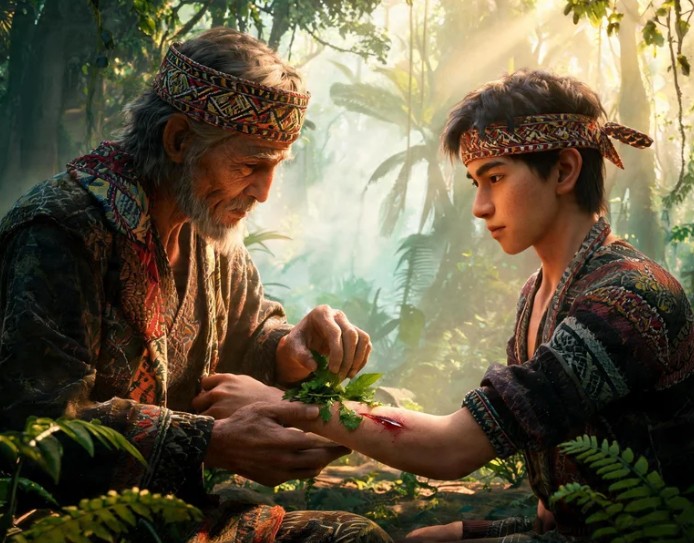
The Dayak Meratus tribe commonly practices traditional medicine that focuses on prevention and first aid for childbirth, injuries, and various illnesses. In treating lacerations, they use locally available materials such as ground coffee, amoxicillin powder, banana shoot leaves, and other plants. The practice poses a risk of infection due to poor hygiene and contaminated tools. The research aimed to explore and describe the lived experiences and meanings that Dayak Meratus tribes attribute to providing first aid for lacerations. This was a qualitative phenomenological study conducted with 25 Dayak Meratus community members with experience in traditional laceration treatment, selected through purposive sampling. The lived experiences of participants were captured through in-depth interviews and were analyzed thematically using Colaizzi's method. Four key themes emerged: (1) types of raw materials used to stop bleeding, (2) first aid practices for lacerations, (3) culturally influenced health-seeking behavior, and (4) wound healing duration. Overall, the Dayak Meratus tribe's traditional wound-care practices are diverse and locally resourceful. However, several practices appear to lack standardized, evidence-based guidance and may raise concerns regarding hygiene and safety. The study found that although some practices appeared effective, they were undermined by the lack of aseptic procedures. The study recommends improving the health education practice by integrating traditional culture and wisdom with modern medical safety standards.
Anggayasti, U. H., Hardiyanti, M., & Natalis, A. (2025). Legal protection of traditional medicine knowledge in Indonesia: integrating local wisdom and modern regulations. The Pan African Medical Journal, 51, 73. https://doi.org/10.11604/pamj.2025.51.73.47755
Anggerainy, S. W., Wanda, D., & Hayati, H. (2017). Combining Natural Ingredients and Beliefs: The Dayak Tribe’s Experience Caring for Sick Children with Traditional Medicine. Comprehensive Child and Adolescent Nursing, 40(sup1), 29–36. https://doi.org/10.1080/24694193.2017.1386968
Az-Zahra, F. R., Sari, N. L. W., Saputry, R., Nugroho, G. D., Sunarto, Pribadi, T., & Setyawan, A. D. (2021). Review: Traditional knowledge of the Dayak Tribes (Borneo) in the use of medicinal plants. Biodiversitas Journal of Biological Diversity, 22(10), 4633–4647. https://doi.org/10.13057/biodiv/d221057
Beck, C. T. (2021). Paul Colaizzi’s Descriptive Phenomenological Methodology. In Introduction to Phenomenology: Focus on Methodology (pp. 19–30). SAGE Publications, Inc. https://doi.org/10.4135/9781071909669
Beltsazar, E. D., Marshellina, C. J., Safitdra, A., Yanti, S. N., Asseggaf, R. S., & Zakiah, M. (2024). Potensi Daun Kemunting (Melastoma Malabathricum) Sebagai Obat Tradisional Suku Dayak Desa Dalam Penyembuhan Luka. Jurnal Kedokteran Dan Kesehatan : Publikasi Ilmiah Fakultas Kedokteran Universitas Sriwijaya, 11(1), 63–75. https://doi.org/10.32539/jkk.v11i1.226
Britto, E. J., Nezwek, T. A., Popowicz, P., & Robins, M. (2024). Wound Dressings. Surgery (United Kingdom), 42(11), 805–813. https://doi.org/10.1016/j.mpsur.2024.08.009
Calvo-Gomez, O., Eshboev, F., Mullaiarova, K., & Egamberdieva, D. (2025). Endophytic Bioactive Compounds for Wound Healing: A Review of Biological Activities and Therapeutic Potential. Microorganisms 2025, Vol. 13, 13(7). https://doi.org/10.3390/microorganisms13071691
Cedillo-Cortezano, M., Martinez-Cuevas, L. R., López, J. A. M., Barrera López, I. L., Escutia-Perez, S., & Petricevich, V. L. (2024). Use of Medicinal Plants in the Process of Wound Healing: A Literature Review. Pharmaceuticals (Basel, Switzerland), 17(3). https://doi.org/10.3390/ph17030303
Gitima, G., Gebre, A., Berhanu, Y., & Wato, T. (2025). Exploring indigenous wisdom: Ethnobotanical documentation and conservation of medicinal plants in Goba District, Southwest Ethiopia. Scientific African, 27(1), e02571. https://doi.org/10.1016/j.sciaf.2025.e02571
Haeruddin, Johan, H., H., U., & Budiman, E. (2017). Ethnobotany Database: Exploring the diversity of medicinal plants of the Dayak Tribe, Borneo. Proceedings of the International Conference on Electrical Engineering, Computer Science, and Informatics.
Herman, A., Wasliman, I., Iriantara, Y., & Suryadi, B. (2021). The Value of Life in Dayak Meratus Custom, Indonesian. Haya Saudi J Life Sci, 6(4), 63–73. https://doi.org/10.36348/sjls.2021.v06i04.002
Kellik Setiawan, V., Affan Ali Murtadlo, A., Nur Muhammad Ansori, A., Dhea Kharisma, V., & Dayu Rahma Turista, D. (2025). The potential of Dayak tribal herbal leaves as anti-breast cancer agents: an in silico approach. BIO Web of Conferences, 153, 01006. https://doi.org/10.1051/bioconf/202515301006
Kwirinus, D., & Yuniarto, P. (2023). The Concept of Recycled Farming According to Dayak Kanayatn and the Cultural Dimension. International Journal Ethnic, Racial and Cultural Heritage, 1(1), 16–31. https://doi.org/10.26418/IJERCH.V1I1.64439.G75676598179
Laksono, A. D., Wul, R. D., ari, Nantabah, Z. K., Agustina, Z. A., Aimanah, I. U., Rukmini, R., Fitrianti, Y., Wardhani, Y. F., Effendi, D., Suharmiati, S., H, L., ayani, & Pratiwi, N. L. (2020). The Concept of Illness among Ethnic Groups in Indonesia: A Meta-Ethnographic Study. Systematic Reviews in Pharmacy, 11(9), 584–591. https://doi.org/10.31838/SRP.2020.9.85
Montasir, L. O., Salzabil, A. Z. A., Rafiun, N. A. S., Kasih, M., & Marsaban, A. (2023). The utilization of medicinal plants in the Kolaka local community: An ethnobotanical study. IAS Journal of Localities, 1(2), 81–92. https://doi.org/10.62033/iasjol.v1i2.19
Mucci, N., Traversini, V., Lulli, L. G., Baldassarre, A., Galea, R. P., & Arcangeli, G. (2020). Upper Limb Injuries in Agriculture: A Systematic Review. International Journal of Environmental Research and Public Health, 17(12), 1–18. https://doi.org/10.3390/ijerph17124501
Murhaini, S., & Achmadi. (2021). The farming management of the Dayak People's community is based on local-wisdom ecosystems in Kalimantan, Indonesia. Heliyon, 7(12), e08578. https://doi.org/10.1016/j.heliyon.2021.e08578
Ndung’u, J. K., Nguta, J. M., Mapenay, I. M., & Moriasi, G. A. (2024). A Comprehensive Review of Ethnomedicinal Uses, Phytochemistry, Pharmacology, and Toxicity of Prunus africana (Hook. F.) Kalkman from Africa. Scientifica, 2024, 8862996. https://doi.org/10.1155/2024/8862996
Nguyen, N. H., Subhan, F. B., Williams, K., & Chan, C. B. (2020). Barriers and Mitigating Strategies to Healthcare Access in Indigenous Communities of Canada: A Narrative Review. Healthcare (Basel, Switzerland), 8(2). https://doi.org/10.3390/healthcare8020112
Novrianti, I., Mustamin, F., & Suharjono, S. (2020). Herbs Used as Analgesics by the Dayak Tribe in North Kalimantan, Indonesia. Journal of Pharmaceutical Sciences and Community, 17(1), 30–40. https://doi.org/10.24071/jpsc.002053
Nurma Wakhidatunnisa, Y., Btari, S., Kusumaningrum, C., Darmawan, E., & Wahyudiningsih, T. S. (2025). Ethnobotany of taro plant diversity (Colocasia esculenta L. Schott) in Magelang as a biological reference book. Biosfer: Jurnal Pendidikan Biologi, 18(1), 26–36. https://doi.org/10.21009/biosferjpb.47491
Palangka Jaya, H., Salampak, Winarti, S., & Adji, F. F. (2021). Exploration of Traditional Medicine Plants of the Dayak Tribe in Palangka Raya. International Journal of Advanced Research in Engineering and Technology (IJARET), 12(1), 320–328. https://doi.org/10.34218/IJARET.12.1.2021.028
Riana, D., Indrawati, I., & Hidayatullah, D. (2022). Dayak Meratus Tribe in The Middle of Modernity in Eva Liana’s Novel ‘Mawinei’: A Cultural Transformation. https://doi.org/10.4108/eai.15-9-2021.2315601
Widayanti, A. W., Green, J. A., Heydon, S., & Norris, P. (2020). Health-Seeking Behavior of People in Indonesia: A Narrative Review. Journal of Epidemiology and Global Health, 10(1), 6–15. https://doi.org/10.2991/jegh.k.200102.001
Widoyanti, A. A. E., Chaikong, K., Rangsinth, P., Saengratwatchara, P., Leung, G. P. H., & Prasansuklab, A. (2023). Valorization of Nam Wah Banana (Musa paradisiaca L.) Byproducts as a Source of Bioactive Compounds with Antioxidant and Anti-inflammatory Properties: In Vitro and In Silico Studies. Foods 2023, Vol. 12, 12(21). https://doi.org/10.3390/foods12213955
Wudali, S. N., Barwad, A., Banadka, A., Shaikh, A., Al-Khayri, J. M., & Nagella, P. (2023). Bioactive Compounds and Biological Activities of Taro (Colocasia esculenta (L.) Schott). Reference Series in Phytochemistry, 2023. https://doi.org/10.1007/978-3-031-29006-0_2-1
Zulkefli, N., Che Zahari, C. N. M., Sayuti, N. H., Kamarudin, A. A., Saad, N., Hamezah, H. S., Bunawan, H., Baharum, S. N., Mediani, A., Ahmed, Q. U., Ismail, A. F. H., & Sarian, M. N. (2023). Flavonoids as Potential Wound-Healing Molecules: Emphasis on Pathways Perspective. International Journal of Molecular Sciences, 24(5). https://doi.org/10.3390/ijms24054607
Copyright (c) 2026 JURNAL INFO KESEHATAN

This work is licensed under a Creative Commons Attribution-NonCommercial-ShareAlike 4.0 International License.
Copyright notice
Ownership of copyright
The copyright in this website and the material on this website (including without limitation the text, computer code, artwork, photographs, images, music, audio material, video material and audio-visual material on this website) is owned by JURNAL INFO KESEHATAN and its licensors.
Copyright license
JURNAL INFO KESEHATAN grants to you a worldwide non-exclusive royalty-free revocable license to:
- view this website and the material on this website on a computer or mobile device via a web browser;
- copy and store this website and the material on this website in your web browser cache memory; and
- print pages from this website for your use.
- All articles published by JURNAL INFO KESEHATAN are licensed under the Creative Commons Attribution 4.0 International License. This permits anyone to copy, redistribute, remix, transmit and adapt the work provided the original work and source is appropriately cited.
JURNAL INFO KESEHATAN does not grant you any other rights in relation to this website or the material on this website. In other words, all other rights are reserved.
For the avoidance of doubt, you must not adapt, edit, change, transform, publish, republish, distribute, redistribute, broadcast, rebroadcast or show or play in public this website or the material on this website (in any form or media) without appropriately and conspicuously citing the original work and source or JURNAL INFO KESEHATAN prior written permission.
Permissions
You may request permission to use the copyright materials on this website by writing to [email protected].
Enforcement of copyright
JURNAL INFO KESEHATAN takes the protection of its copyright very seriously.
If JURNAL INFO KESEHATAN discovers that you have used its copyright materials in contravention of the license above, JURNAL INFO KESEHATAN may bring legal proceedings against you seeking monetary damages and an injunction to stop you using those materials. You could also be ordered to pay legal costs.
If you become aware of any use of JURNAL INFO KESEHATAN copyright materials that contravenes or may contravene the license above, please report this by email to [email protected]
Infringing material
If you become aware of any material on the website that you believe infringes your or any other person's copyright, please report this by email to [email protected].