Meta-Analysis Study of Correlation Between Olfactory Dysfunction and Cognitive Impairment in Parkinson's Disease

Downloads
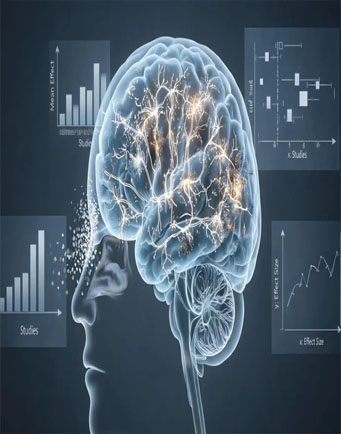
Disturbance in olfactory perception is commonly identified as a non motor manifestation in Parkinson’s disease and is often interpreted as an early biological signal reflecting ongoing degeneration of neural structures. This study was specifically formulated to conduct an in depth evaluation of the association between reduced smell performance and impaired cognitive functioning in Parkinson’s disease by applying systematic numerical aggregation techniques that adhere to internationally accepted research protocols. A broad and methodologically organized literature exploration was conducted using PubMed Wiley and ScienceDirect to identify empirical studies examining the association linking smell processing ability with mental functioning measures in individuals diagnosed with Parkinson’s disease. The screening process was carried out in accordance with clearly defined inclusion requirements. Assessment of smell function relied on the olfactory recognition assessment developed by the University of Pennsylvania Test UPSIT while evaluation of cognitive condition employed the MMSE alongside the MoCA cognitive screening tools. Pooled odds ratio values along with 95% confidence interval ranges were calculated using a random effects modeling framework. Overall 3 eligible studies comprising 773 individuals conducted in populations from America, Korea, and Britain met the established inclusion standards. Quantitative synthesis revealed a statistically meaningful relationship between impaired olfactory ability and reduced cognitive performance in Parkinson’s disease, with individuals experiencing hyposmia or anosmia showing a markedly increased probability of cognitive impairment compared with participants exhibiting intact smell perception OR 2.57 95% CI 1.15 to 5.74. The results of this analysis suggest a strong and statistically significant relationship between diminished olfactory capacity and cognitive impairment in Parkinson’s disease, highlighting its potential role as an early detectable clinical indicator of progressive cognitive deterioration. Despite the presence of variability among included studies and a relatively small pool of eligible research, the meta analytic evidence supports the usefulness of olfactory assessment as a non invasive and economically efficient approach for identifying cognitive risk in Parkinson’s disease. Additional large scale investigations employing uniform evaluation protocols are necessary to confirm these outcomes and enhance their relevance in clinical practice.
Aarsland, D., Batzu, L., Halliday, G. M., Geurtsen, G. J., Ballard, C., Ray Chaudhuri, K., & Weintraub, D. (2021). Parkinson disease-associated cognitive impairment. Nature Reviews Disease Primers, 7(1), 47. https://doi.org/10.1038/s41572-021-00280-3
Abraham, J. N., Rawat, D., Srikanth, P., Sunny, L. P., & Abraham, N. M. (2025). Alpha-synuclein pathology and Parkinson’s disease-related olfactory dysfunctions: an update on preclinical models and therapeutic approaches. Mammalian Genome, 36(2), 444–464. https://doi.org/10.1007/s00335-025-10128-w
Avanipully, J. N., Thekkekkara, D., M, S., Parihar, V. K., & Manjula, S. N. (2022). The Role of Olfactory System in the Etiogenesis of Parkinson’s Diseases: An Overview. Journal of Pharmacology and Pharmacotherapeutics, 13(1), 31–39. https://doi.org/10.1177/0976500X221085802
Bagherieh, S., Arefian, N. M., Ghajarzadeh, M., Tafreshinejad, A., Zali, A., Mirmosayyeb, O., & Safari, S. (2023). Olfactory dysfunction in patients with Parkinson's disease: A systematic review and meta-analysis. Current Journal of Neurology, 22(4), 249. https://doi.org/10.18502/cjn.v22i4.14530
Ben-Shlomo, Y., Darweesh, S., Llibre-Guerra, J., Marras, C., San Luciano, M., & Tanner, C. (2024). The epidemiology of Parkinson’s disease. The Lancet, 403(10423), 283–292. https://doi.org/10.1016/S0140-6736(23)01419-8
Bologna, M. (2021). Pathophysiology of motor symptoms in Parkinson’s disease: Role of primary motor cortex. Journal of the Neurological Sciences, 429, 117909. https://doi.org/10.1016/j.jns.2021.117909
Dahbour, S. S., Al Murr, M. J., Oweis, L. H., Al Antary, N. T., Mohsen, M., & Al Fegi, S. (2022). Non-motor manifestation of Parkinson’s disease: a cross-sectional study in a teaching hospital in Jordan. The Egyptian Journal of Neurology, Psychiatry and Neurosurgery, 58(1), 148. https://doi.org/10.1186/s41983-022-00559-6
Degirmenci, Y., Angelopoulou, E., Georgakopoulou, V. E., & Bougea, A. (2023). Cognitive Impairment in Parkinson’s Disease: An Updated Overview Focusing on Emerging Pharmaceutical Treatment Approaches. Medicina, 59(10), 1756. https://doi.org/10.3390/medicina59101756
Doty, R. L., & Hawkes, C.H. (2022). Olfactory Dysfunction in Parkinson’s Disease and Related Disorders. In N. Gálvez-Jiménez, A. D. Korczyn, & R. Lugo-Sanchez (Eds.), Non-motor Parkinson’s Disease (pp. 99–114). Cambridge: Cambridge University Press. https://doi.org/DOI: 10.1017/9781009039291.011
Fullard, M. E., Tran, B., Xie, S. X., Toledo, J. B., Scordia, C., Linder, C., … Morley, J. F. (2016). Olfactory impairment predicts cognitive decline in early Parkinson’s disease. Parkinsonism & Related Disorders, 25, 45–51. https://doi.org/10.1016/j.parkreldis.2016.02.013
He, R., Zhao, Y., He, Y., Zhou, Y., Yang, J., Zhou, X., Guo, J. (2020). Olfactory dysfunction predicts disease progression in Parkinson’s disease: A longitudinal study. Frontiers in Neuroscience, 14, 569777. https://doi.org/10.3389/fnins.2020.569777
Jellinger, K. A. (2023). Pathobiology of Cognitive Impairment in Parkinson Disease: Challenges and Outlooks. International Journal of Molecular Sciences, 25(1), 498. https://doi.org/10.3390/ijms25010498
Jia, X., Wang, Z., Huang, F., Su, C., Du, W., Jiang, H., … Zhang, B. (2021). A comparison of the Mini-Mental State Examination (MMSE) with the Montreal Cognitive Assessment (MoCA) for mild cognitive impairment screening in Chinese middle-aged and older population: a cross-sectional study. BMC Psychiatry, 21(1), 485. https://doi.org/10.1186/s12888-021-03495-6
Louis, E. D., Mayer, S. A., & Noble, J. M. (2022). Merritt’s Neurology, 14e. Lippincott Williams & Wilkins, a Wolters Kluwer business.
Mertens, A. T., Santo, J. B., Markopoulou, K., & Chase, B. A. (2019). Cognitive processes that indirectly affect olfactory dysfunction in Parkinson’s disease. Clinical Parkinsonism & Related Disorders, 1, 13–20. https://doi.org/10.1016/j.prdoa.2019.07.003
Morley, J. F., Cohen, A., Silveira-Moriyama, L., Lees, A. J., Williams, D. R., Katzenschlager, R., … Duda, J. E. (2018). Optimizing olfactory testing for the diagnosis of Parkinson’s disease: item analysis of the university of Pennsylvania smell identification test. Npj Parkinson’s Disease, 4(2),1-7. https://doi.org/10.1038/s41531-017-0039-8
Oikonomou, P., Akhoundi, F. H., Olfati, N., & Litvan, I. (2026). Characteristics and mechanisms of cognitive impairment in Parkinson disease. Nature Reviews Neurology, 22(2), 90–109. https://doi.org/10.1038/s41582-025-01163-x
Ponsen, M. M., Stoffers, D., Booij, J., van Eck‐Smit, B. L. F., Wolters, E. Ch., & Berendse, H. W. (2004). Idiopathic hyposmia as a preclinical sign of Parkinson’s disease. Annals of Neurology, 56(2), 173–181. https://doi.org/10.1002/ana.20160
Rashed, K. H., Bahnasy, W. S., El-Heneedy, Y. A. E., El-Seidy, E. A. S., Tomoum, M. O., Eltomey, M. A., & ELAhwal, S. A. (2020). Patterns of olfactory dysfunctions in patients with Parkinson disease. The Egyptian Journal of Neurology, Psychiatry and Neurosurgery, 56(1), 73. https://doi.org/10.1186/s41983-020-00205-z
Rietdijk, C. D., Perez-Pardo, P., Garssen, J., Van Wezel, R. J., & Kraneveld, A. D. (2017). Exploring Braak’s hypothesis of Parkinson’s disease. Frontiers in neurology, 8, 37. https://doi.org/10.3389/fneur.2017.00037
Ropper, A. H., Samuels, M. A., & Klein, J. (2014). Adams and Victor’s principles of neurology. In Principles of neurology (Tenth edition.). New York: McGraw-Hill Education Medical.
Seyedmirzaei, H., Rasoulian, P., Parsaei, M., Hamidi, M., Ghanbari, A., Soltani Khaboushan, A., … Sotoudeh, H. (2024). Microstructural correlates of olfactory dysfunction in Parkinson’s Disease: a systematic review of diffusion MRI studies. Brain Imaging and Behavior, 19(1), 240–252. https://doi.org/10.1007/s11682-024-00934-2
Thomas, A. J., Hamilton, C. A., Barker, S., Durcan, R., Lawley, S., Barnett, N., … Donaghy, P. C. (2022). Olfactory impairment in mild cognitive impairment with Lewy bodies and Alzheimer’s disease. International Psychogeriatrics, 34(6), 585–592. https://doi.org/10.1017/S1041610221001265
Torres-Pasillas, G., Chi-Castañeda, D., Carrillo-Castilla, P., Marín, G., Hernández-Aguilar, M. E., Aranda-Abreu, G. E., … García, L. I. (2023). Olfactory Dysfunction in Parkinson’s Disease, Its Functional and Neuroanatomical Correlates. NeuroSci, 4(2), 134–151. https://doi.org/10.3390/neurosci4020013
Turana, Y., Ranakusuma, T. A. S., Purba, J. S., Amir, N., Ahmad, S. A., Machfoed, Moh. H., … Waspadji, S. (2014). Enhancing Diagnostic Accuracy of aMCI in the Elderly: Combination of Olfactory Test, Pupillary Response Test, BDNF Plasma Level, and APOE Genotype. International Journal of Alzheimer’s Disease, 2014, 1–9. https://doi.org/10.1155/2014/912586
Turkmen, N., Sücüllü Karadağ, Y., & Öztekin, Z. N. (2021). Examination and clinical correlation of olfactory system disorders by an objective method Sniffin’ Sticks odor test in Parkinson’s disease. The European Research Journal, 7(1), 44–51. https://doi.org/10.18621/eurj.591659
Wal, P., Dwivedi, J., Wal, A., Vig, H., & Singh, Y. (2022). Detailed insight into the pathophysiology and the behavioral complications associated with the Parkinson's disease and its medications. Future Journal of Pharmaceutical Sciences, 8(1), 33. https://doi.org/10.1186/s43094-022-00425-5
Yoo, H. S., Chung, S. J., Lee, Y. H., Ye, B. S., Sohn, Y. H., & Lee, P. H. (2020). Association between Olfactory Deficit and Motor and Cognitive Function in Parkinson’s Disease. Journal of Movement Disorders, 13(2), 133–141. https://doi.org/10.14802/jmd.19082
Zafar, S. Lui, F., & Yaddanapudi, S.S.(2025). Parkinson Disease. Treasure Island (FL): StatPearls Publishing. Retrieved from https://www.ncbi.nlm.nih.gov/books/NBK470193/
Zhou, Z. D., Yi, L. X., Wang, D. Q., Lim, T. M., & Tan, E. K. (2023). Role of dopamine in the pathophysiology of Parkinson’s disease. Translational Neurodegeneration, 12(1), 44. https://doi.org/10.1186/s40035-023-00378-6
Copyright (c) 2026 JURNAL INFO KESEHATAN

This work is licensed under a Creative Commons Attribution-NonCommercial-ShareAlike 4.0 International License.
Copyright notice
Ownership of copyright
The copyright in this website and the material on this website (including without limitation the text, computer code, artwork, photographs, images, music, audio material, video material and audio-visual material on this website) is owned by JURNAL INFO KESEHATAN and its licensors.
Copyright license
JURNAL INFO KESEHATAN grants to you a worldwide non-exclusive royalty-free revocable license to:
- view this website and the material on this website on a computer or mobile device via a web browser;
- copy and store this website and the material on this website in your web browser cache memory; and
- print pages from this website for your use.
- All articles published by JURNAL INFO KESEHATAN are licensed under the Creative Commons Attribution 4.0 International License. This permits anyone to copy, redistribute, remix, transmit and adapt the work provided the original work and source is appropriately cited.
JURNAL INFO KESEHATAN does not grant you any other rights in relation to this website or the material on this website. In other words, all other rights are reserved.
For the avoidance of doubt, you must not adapt, edit, change, transform, publish, republish, distribute, redistribute, broadcast, rebroadcast or show or play in public this website or the material on this website (in any form or media) without appropriately and conspicuously citing the original work and source or JURNAL INFO KESEHATAN prior written permission.
Permissions
You may request permission to use the copyright materials on this website by writing to [email protected].
Enforcement of copyright
JURNAL INFO KESEHATAN takes the protection of its copyright very seriously.
If JURNAL INFO KESEHATAN discovers that you have used its copyright materials in contravention of the license above, JURNAL INFO KESEHATAN may bring legal proceedings against you seeking monetary damages and an injunction to stop you using those materials. You could also be ordered to pay legal costs.
If you become aware of any use of JURNAL INFO KESEHATAN copyright materials that contravenes or may contravene the license above, please report this by email to [email protected]
Infringing material
If you become aware of any material on the website that you believe infringes your or any other person's copyright, please report this by email to [email protected].