The Relationship between Vascular Elasticity and Cognitive Function in Medical Students

Downloads
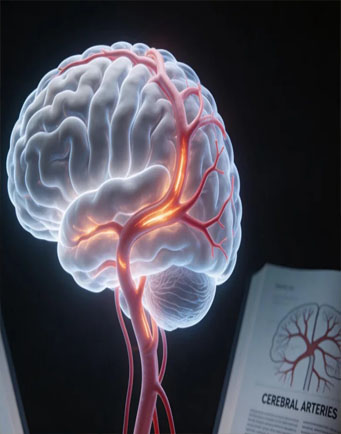
Vascular stiffness is a known risk factor for cognitive impairment, particularly in the elderly. However, its impact on younger populations, such as medical students, remains less explored. Early subtle changes in vascular health may affect cognitive domains necessary for academic performance. This study aimed to examine the relationship between vascular elasticity and cognitive function in medical students. A cross-sectional study design was conducted using simple random sampling. Cognitive function was assessed using the Mini-Mental State Examination (MMSE), Digit Symbol Substitution Test (DSST), and Digit Span Test (DST). Vascular elasticity was measured using the SA-3000P accelerated photoplethysmography analyzer and categorized as suboptimal, normal, or optimal. The sample size was 51 subjects who met the following criteria: non-smokers with low to moderate stress levels, and no history of head trauma, brain haemorrhage, narcotics use, diabetes mellitus, or hypertension. The Mann-Whitney test revealed a significant difference in MMSE scores between groups with different levels of vascular elasticity (p = 0.042). The Chi-square test also revealed a significant difference in DSST between groups with different levels of vascular elasticity (p = 0.023; PR = 6.667; CI = 0.969 - 45.857). However, no significant difference was found in DST scores (p = 0.072). In conclusion, this study found a significant relationship between vascular elasticity and cognitive function in medical students, suggesting that early vascular changes may influence cognitive function even in young, healthy individuals.
Arevalo-Rodriguez, I., Smailagic, N., Roqué I Figuls, M., Ciapponi, A., Sanchez-Perez, E., Giannakou, A., Pedraza, O. L., Bonfill Cosp, X., & Cullum, S. (2015). Mini-Mental State Examination (MMSE) for the detection of Alzheimer's disease and other dementias in people with mild cognitive impairment (MCI). The Cochrane database of systematic reviews, 2015(3), CD010783. https://doi.org/10.1002/14651858.CD010783.pub2
Astutik, E., Puspikawati, S. I., Dewi, D. M. S. K., Mandagi, A. M., & Sebayang, S. K. (2020). Prevalence and Risk Factors of High Blood Pressure among Adults in Banyuwangi Coastal Communities, Indonesia. Ethiopian Journal of Health Sciences, 30(6), 941–950. https://doi.org/10.4314/ejhs.v30i6.12
Ayudia, T., Bustamam, N., Harjono Hadiwiardjo, Y., & Agustini Purwaningastuti, D. (2025). Association between muscle-to-visceral fat ratio and vascular elasticity in medical students. World Nutrition Journal, 9(i1), 41–48. https://doi.org/10.25220/WNJ.V09.i1.0005
Bareiro, F. A. Q., Carnicero, J. A., Acha, A. A., Artalejo, C. R., Jimenez, M. C. G., Mañas, L. R., & García García, F. J. (2024). Carotid-femoral pulse wave velocity score, an estimator of cognitive performance in the elderly: results from the Toledo Study for Healthy Aging. GeroScience, 46(6), 5711–5723. https://doi.org/10.1007/s11357-024-01189-x
Budiman, A. N., Bustamam, N., Safira, L., & Makkiyah, F. A. (2024). The Relationship between Visceral Fat and Cognitive Function in Medical Students. Window of Health : Jurnal Kesehatan, 7(2), 111–119. https://doi.org/10.33096/woh.v7i2.728
Cai, X., Xu, L., Zhang, H., Sun, T., Yu, J., Jia, X., ... & Pang, J. (2024). The effects of exergames for cognitive function in older adults with mild cognitive impairment: a systematic review and metaanalysis. Frontiers in Neurology, 15, 1424390. https://doi.org/10.3389/fneur.2024.1424390
Cristofori, I., Cohen-Zimerman, S., & Grafman, J. (2019). Executive functions. Handbook of clinical neurology, 163, 197-219. https://doi.org/10.1016/B978-0-12-804281-6.00011-2
Djajasaputra, A. D. R., & Halim, M. S. (2019). Fungsi Kognitif Lansia yang Beraktivitas Kognitif secara Rutin dan Tidak Rutin. Jurnal Psikologi, 46(2), 85. https://doi.org/10.22146/jpsi.33192
DuPont, J. J., Kenney, R. M., Patel, A. R., & Jaffe, I. Z. (2019). Sex differences in mechanisms of arterial stiffness. British Journal of Pharmacology, 176(21), 4208–4225. https://doi.org/10.1111/bph.14624
Elgendi, M., Jost, E., Alian, A., Fletcher, R. R., Bomberg, H., Eichenberger, U., & Menon, C. (2024). Photoplethysmography Features Correlated with Blood Pressure Changes. Diagnostics, 14(20), 1–16. https://doi.org/10.3390/diagnostics14202309
Fu, C., Li, Z., & Mao, Z. (2018). Association between social activities and cognitive function among the elderly in China: a cross-sectional study. International journal of environmental research and public health, 15(2), 231. https://doi.org/10.3390/ijerph15020231
Gärtner, A., Behnke, A., Conrad, D., Kolassa, I. T., & Rojas, R. (2019). Emotion regulation in rescue workers: Differential relationship with perceived work-related stress and stress-related symptoms. Frontiers in Psychology, 9, 1–12. https://doi.org/10.3389/fpsyg.2018.02744
Geijselaers, S. L. C., Sep, S. J. S., Schram, M. T., van Boxtel, M. P. J., van Sloten, T. T., Henry, R. M. A., Reesink, K. D., Kroon, A. A., Koster, A., Schaper, N. C., Dagnelie, P. C., van der Kallen, C. J. H., Biessels, G. J., & Stehouwer, C. D. A. (2016). Carotid stiffness is associated with impairment of cognitive performance in individuals with and without type 2 diabetes. The Maastricht Study. Atherosclerosis, 253, 186–193. https://doi.org/10.1016/j.atherosclerosis.2016.07.912
Iulita, M. F., Noriega de la Colina, A., & Girouard, H. (2018). Arterial stiffness, cognitive impairment and dementia: confounding factor or real risk? Journal of Neurochemistry, 144(5), 527–548. https://doi.org/10.1111/jnc.14235
Jaeger, J. (2018). Digit symbol substitution test. Journal of Clinical Psychopharmacology, 38(5), 513–519. https://doi.org/10.1097/JCP.0000000000000941
Kementerian Kesehatan Republik Indonesia. (2018). Hasil Utama Riskesdas 2018. Jakarta: Kementerian Kesehatan Republik Indonesia. Retrieved from https://kesmas.kemkes.go.id/assets/upload/dir_519d41d8cd98f00/files/Hasil-riskesdas-2018_1274.pdf
Lamar, M., Swenson, R., Penney, D. L., Kaplan, E., Libon, D. J., & Roosevelt, T. (2018). Encyclopedia of Clinical Neuropsychology. Encyclopedia of Clinical Neuropsychology, 1–7. https://doi.org/10.1007/978-3-319-56782-2
Li, P., Wang, L., & Liu, C. (2017). Overweightness, obesity and arterial stiffness in healthy subjects: a systematic review and meta-analysis of literature studies. Postgraduate Medicine, 129(2), 224–230. https://doi.org/10.1080/00325481.2017.1268903
Lu, Y., Kiechl, S. J., Wang, J., Xu, Q., Kiechl, S., Pechlaner, R., Aguilar, D., Al-Hashmi, K. M., Alvim, R. O., Al-Zakwani, I. S., Antza, C., Cicero, A. F. G., Avramovska, M., Avramovski, P., Baek, H. J., Bäck, M., Bailey, K., Baldo, M. P., Batista, R. F. L., … Zócalo, Y. (2023). Global distributions of age- and sex-related arterial stiffness: systematic review and meta-analysis of 167 studies with 509,743 participants. EBioMedicine, 92, 1–15. https://doi.org/10.1016/j.ebiom.2023.104619
Muela, H. C. S., Costa-Hong, V. A., Yassuda, M. S., Machado, M. F., Nogueira, R. de C., Moraes, N. C., Memória, C. M., Macedo, T. A., Bor-Seng-Shu, E., Massaro, A. R., Nitrini, R., & Bortolotto, L. A. (2017). Impacto da gravidade da hipertensão na rigidez arterial, vasorreatividade cerebral e desempenho cognitivo. Dementia e Neuropsychologia, 11(4), 389–397. https://doi.org/10.1590/1980-57642016dn11-040008
Murakami, T., Asai, K., Kadono, Y., Nishida, T., Nakamura, H., & Kishima, H. (2019). Assessment of arterial stiffness index calculated from accelerated photoplethysmography. Artery Research, 25(1–2), 37–40. https://doi.org/10.2991/artres.k.191120.001
Nainggolan, O., Indrawati, L., & Pradono, J. (2019). Kebugaran Jasmani menurut instrument GPAQ dibandingkan dengan VO2max pada wanita umur 25 sampai 54 tahun. Buletin Penelitian Sistem Kesehatan, 21(4), 271–280. https://doi.org/10.22435/hsr.v21i4.752
Nascimento, A., Barros, D., Oliveira, J., Carvalho, J., & Bohn, L. (2019). Physical Fitness is a Mediator in the Relationship between Arterial Stiffness and Cognitive Function. Artery Research, 25(3–4), 151–155. https://doi.org/10.2991/artres.k.191121.001
Nieboer, D., Douw, L., Van Dijk, B. W., Heymans, M. W., Stam, C. J., & Twisk, J. W. R. (2016). Relation between carotid stiffness, cognitive performance and brain connectivity in a healthy middle-aged population: An observational neurophysiological cohort study with magnetoencephalography. BMJ Open, 6(12), 1–8. https://doi.org/10.1136/bmjopen-2016-013441
Pais, R., Ruano, L., P Carvalho, O., & Barros, H. (2020). Global Cognitive Impairment Prevalence and Incidence in Community Dwelling Older Adults-A Systematic Review. Geriatrics (Basel, Switzerland), 5(4), 84. https://doi.org/10.3390/geriatrics5040084
Piko, N., Bevc, S., Hojs, R., Petreski, T., & Ekart, R. (2023). Higher Body Mass Index is associated with increased arterial stiffness prior to target organ damage: a cross-sectional cohort study. BMC cardiovascular disorders, 23(1), 460. https://doi.org/10.1186/s12872-023-03503-5
Puteikis, K., Ažukaitis, K., Dadurkevičienė, D., Simanauskas, K., Šileikienė, V., Jankauskienė, A., & Mameniškienė, R. (2024). Primary Arterial Hypertension Associated with Cognitive Dysfunction in Young Adults: Results from a Cross-Sectional Controlled Study. Behavioral sciences (Basel, Switzerland), 14(4), 321. https://doi.org/10.3390/bs14040321
Qin, S., & Basak, C. (2022). Comparing the Effects of Two Cardiovascular Health Factors on Working Memory Capacity in Healthy Aging: Separate and Combined Effects of Arterial Elasticity and Physical Fitness. Journals of Gerontology - Series B Psychological Sciences and Social Sciences, 77(1), 94–103. https://doi.org/10.1093/geronb/gbab071
Reeve, E. H., Barnes, J. N., Moir, M. E., & Walker, A. E. (2024). Impact of arterial stiffness on cerebrovascular function: a review of evidence from humans and preclinical models. American Journal of Physiology-Heart and Circulatory Physiology, 326(3), H689–H704. https://doi.org/10.1152/ajpheart.00592.2023
Rensma, S. P., Stehouwer, C. D. A., Van Boxtel, M. P. J., Houben, A. J. H. M., Berendschot, T. T. J. M., Jansen, J. F. A., Schalkwijk, C. G., Verhey, F. R. J., Kroon, A. A., Henry, R. M. A., Backes, W. H., Dagnelie, P. C., Van Dongen, M. C. J. M., Eussen, S. J. P. M., Bosma, H., Köhler, S., Reesink, K. D., Schram, M. T., & Van Sloten, T. T. (2020). Associations of Arterial Stiffness with Cognitive Performance, and the Role of Microvascular Dysfunction: The Maastricht Study. Hypertension, 75(6), 1607–1614. https://doi.org/10.1161/HYPERTENSIONAHA.119.14307
Scott, S. B., Graham-Engeland, J. E., Engeland, C. G., Smyth, J. M., Almeida, D. M., Katz, M. J., Lipton, R. B., Mogle, J. A., Munoz, E., Ram, N., & Sliwinski, M. J. (2015). The Effects of Stress on Cognitive Aging, Physiology and Emotion (ESCAPE) Project. BMC Psychiatry, 15(1), 1–14. https://doi.org/10.1186/s12888-015-0497-7
Shah, S., Shah, S., & Shivani, C. (2020). Relationship between physical activity and cognition among young adults. The Journal of Indian Association of Physiotherapists, 14, 41–45. https://doi.org/10.4103/PJIAP.PJIAP_43_18
Szaló, G., Hellgren, M., Allison, M., Råstam, L., Lindblad, U., & Daka, B. (2021). Longitudinal association between leisure-time physical activity and vascular elasticity indices. BMC Cardiovascular Disorders, 21(1), 1–8. https://doi.org/10.1186/s12872-021-01911-z
Tang, B., Luo, F., Zhao, J., Ma, J., Tan, I., Butlin, M., Avolio, A., & Zuo, J. (2020). Relationship between body mass index and arterial stiffness in a health assessment Chinese population. Medicine, 99(3), e18793. https://doi.org/10.1097/MD.0000000000018793
Tung, L. C., Yu, W. H., Lin, G. H., Yu, T. Y., Wu, C. Te, Tsai, C. Y., Chou, W., Chen, M. H., & Hsieh, C. L. (2016). Development of a Tablet-based symbol digit modalities test for reliably assessing information processing speed in patients with stroke. Disability and Rehabilitation, 38(19), 1952–1960. https://doi.org/10.3109/09638288.2015.1111438
Vikner, T., Eklund, A., Karalija, N., Malm, J., Riklund, K., Lindenberger, U., Bäckman, L., Nyberg, L., & Wåhlin, A. (2021). Cerebral arterial pulsatility is linked to hippocampal microvascular function and episodic memory in healthy older adults. Journal of Cerebral Blood Flow and Metabolism, 41(7), 1778–1790. https://doi.org/10.1177/0271678X20980652
Widyaningrum, C., Bustamam, N., Dewi, S. Y., & Theresa, R. M. (2024). Fungsi Kognitif Mahasiswa Kedokteran dengan Prehipertensi dan Obesitas. Jurnal Kedokteran Meditek, 30(2), 59–65. https://doi.org/10.36452/jkdoktmeditek.v30i2.3083
Copyright (c) 2026 JURNAL INFO KESEHATAN

This work is licensed under a Creative Commons Attribution-NonCommercial-ShareAlike 4.0 International License.
Copyright notice
Ownership of copyright
The copyright in this website and the material on this website (including without limitation the text, computer code, artwork, photographs, images, music, audio material, video material and audio-visual material on this website) is owned by JURNAL INFO KESEHATAN and its licensors.
Copyright license
JURNAL INFO KESEHATAN grants to you a worldwide non-exclusive royalty-free revocable license to:
- view this website and the material on this website on a computer or mobile device via a web browser;
- copy and store this website and the material on this website in your web browser cache memory; and
- print pages from this website for your use.
- All articles published by JURNAL INFO KESEHATAN are licensed under the Creative Commons Attribution 4.0 International License. This permits anyone to copy, redistribute, remix, transmit and adapt the work provided the original work and source is appropriately cited.
JURNAL INFO KESEHATAN does not grant you any other rights in relation to this website or the material on this website. In other words, all other rights are reserved.
For the avoidance of doubt, you must not adapt, edit, change, transform, publish, republish, distribute, redistribute, broadcast, rebroadcast or show or play in public this website or the material on this website (in any form or media) without appropriately and conspicuously citing the original work and source or JURNAL INFO KESEHATAN prior written permission.
Permissions
You may request permission to use the copyright materials on this website by writing to [email protected].
Enforcement of copyright
JURNAL INFO KESEHATAN takes the protection of its copyright very seriously.
If JURNAL INFO KESEHATAN discovers that you have used its copyright materials in contravention of the license above, JURNAL INFO KESEHATAN may bring legal proceedings against you seeking monetary damages and an injunction to stop you using those materials. You could also be ordered to pay legal costs.
If you become aware of any use of JURNAL INFO KESEHATAN copyright materials that contravenes or may contravene the license above, please report this by email to [email protected]
Infringing material
If you become aware of any material on the website that you believe infringes your or any other person's copyright, please report this by email to [email protected].