The Association between Waist-to-Height Ratio and Vascular Characteristics in Normal Body Mass Index

Downloads
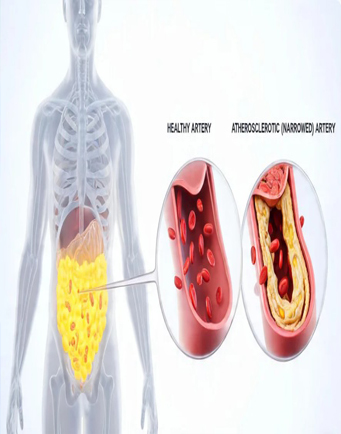
Cardiovascular disease (CVD) is the leading cause of death globally. Male medical students are highly susceptible to CVD risk due to high academic stress and hormonal profiles. Although body mass index (BMI) is commonly used to assess nutritional status, this parameter cannot detect body fat distribution, especially visceral fat, which is more likely to cause CVD than subcutaneous fat. This study aims to investigate the relationship between Waist-to-Height Ratio (WHtR) and vascular characteristics in male medical students with normal BMI. This study used a cross-sectional design and a total sampling technique. Sample characteristics were collected using a questionnaire, while WHtR was measured using a waist circumference tape and a microtoise. Vascular characteristics were measured using an accelerated photoplethysmograph (APG) analyzer, SA-3000P. The participants were 49 male medical students aged 18-22 years, with normal BMI, light or moderate physical activity, and good sleep quality. The results of this study showed that the proportions of suboptimal aging index, arterial elasticity, peripheral elasticity, and wave type level 2 were higher in the high-risk WHtR group than in the normal WHtR group. However, statistical analysis using the Chi-square test indicated that these differences were not statistically significant (p = 0.291; p = 0.742; p = 0.062; p = 0.648, respectively). These findings emphasize the importance of individuals with high-risk WHtR adopting a healthy lifestyle, including regular exercise and a healthy diet, to maintain vascular health.
Alim, I. Z. (2015). Uji validitas dan reliabilitas instrumen Pittsburgh Sleep Quality Index versi Bahasa Indonesia. Fakultas Kedokteran Universitas Indonesia, Jakarta.
Alser, M., Naja, K., & Elrayess, M. A. (2024). Mechanisms of body fat distribution and gluteal-femoral fat protection against metabolic disorders. Frontiers in nutrition, 11, 1368966. https://doi.org/10.3389/fnut.2024.1368966
Anwar, N. I. A., & Zulfikar, M. (2024). Tingkat Aktivitas Fisik Mahasiswa: Studi Global Physical Activity Questionnaire. Indonesian Journal of Physical Activity, 4(2), 262-269. doi: https://doi.org/10.59734/ijpa.v4i2.102
Ashwell, M., & Gibson, S. (2016). Waist-to-height ratio as an indicator of 'early health risk': simpler and more predictive than using a 'matrix' based on BMI and waist circumference. BMJ open, 6(3), e010159. https://doi.org/10.1136/bmjopen-2015-010159
Bakhtiyari, M., Kazemian, E., Kabir, K., Hadaegh, F., Aghajanian, S., Mardi, P., Ghahfarokhi, N. T., Ghanbari, A., Mansournia, M. A., & Azizi, F. (2022). Contribution of obesity and cardiometabolic risk factors in developing cardiovascular disease: a population-based cohort study. Scientific reports, 12(1), 1544. https://doi.org/10.1038/s41598-022-05536-w
Cao, H., Huang, X., Luo, B., Shi, W., Li, H., & Shi, R. (2024). Gender Differences of Visceral Fat Area to Hip Circumference Ratio for Insulin Resistance. Diabetes, metabolic syndrome and obesity : targets and therapy, 17, 3935–3942. https://doi.org/10.2147/DMSO.S482820
Cicekli, I., & Gokce Eskin, S. (2025). High prevalence and co-occurrence of modifiable risk factors for non-communicable diseases among university students: a cross-sectional study. Frontiers in public health, 12, 1484164. https://doi.org/10.3389/fpubh.2024.1484164
Devesa, A., Ibanez, B., Malick, W. A., Tinuoye, E. O., Bustamante, J., Peyra, C., Rosenson, R. S., Bhatt, D. L., Stone, G. W., & Fuster, V. (2023). Primary Prevention of Subclinical Atherosclerosis in Young Adults: JACC Review Topic of the Week. Journal of the American College of Cardiology, 82(22), 2152–2162. https://doi.org/10.1016/j.jacc.2023.09.817
Donadini, M. P., Calcaterra, F., Romualdi, E., Ciceri, R., Cancellara, A., Lodigiani, C., Bacci, M., Della Bella, S., Ageno, W., & Mavilio, D. (2025). The Link Between Venous and Arterial Thrombosis: Is There a Role for Endothelial Dysfunction?. Cells, 14(2), 144. https://doi.org/10.3390/cells14020144
Erdoğan, O., Erdoğan, T., Önür, N. H., Özkök, S., Karan, M. A., & Bahat, G. (2025). Beyond BMI: central obesity measures and cardiovascular risk in late life. Aging clinical and experimental research, 37(1), 287. https://doi.org/10.1007/s40520-025-03197-z
Estebsari, F., Barati, M., Stiri, S., Latifi, M., Shahsavari, A., Milani, A. S., & RahimiKhalifehKandi, Z. (2024). Risk factors of cardiovascular disease (CVD) in young adults: a community-based study of Iranian context. BMC public health, 24(1), 2543. https://doi.org/10.1186/s12889-024-20030-w
Gao, X. X., Wang, L. M., Zhang, X., Zhao, Z. P., Li, C., Huang, Z. J., Liu, C. Y., Xue, T. T., Jiang, B., Guan, Y. Q., & Zhang, M. (2023). Zhonghua liu xing bing xue za zhi = Zhonghua liuxingbingxue zazhi, 44(8), 1190–1197. https://doi.org/10.3760/cma.j.cn112338-20221125-01000
Global Burden of Cardiovascular Diseases and Risks 2023 Collaborators (2025). Global, Regional, and National Burden of Cardiovascular Diseases and Risk Factors in 204 Countries and Territories, 1990-2023. Journal of the American College of Cardiology, 86(22), 2167–2243. https://doi.org/10.1016/j.jacc.2025.08.015
González, L. D. M., Romero-Orjuela, S. P., Rabeya, F. J., Del Castillo, V., & Echeverri, D. (2023). Age and vascular aging: an unexplored frontier. Frontiers in cardiovascular medicine, 10, 1278795. https://doi.org/10.3389/fcvm.2023.1278795
Hennigs, J. K., Matuszcak, C., Trepel, M., & Körbelin, J. (2021). Vascular Endothelial Cells: Heterogeneity and Targeting Approaches. Cells, 10(10), 2712. https://doi.org/10.3390/cells10102712
Herzog, M. J., Müller, P., Lechner, K., Stiebler, M., Arndt, P., Kunz, M., Ahrens, D., Schmeißer, A., Schreiber, S., & Braun-Dullaeus, R. C. (2025). Arterial stiffness and vascular aging: mechanisms, prevention, and therapy. Signal transduction and targeted therapy, 10(1), 282. https://doi.org/10.1038/s41392-025-02346-0
Jin, J., Geng, X., Zhang, Y., Zhang, H., & Ye, T. (2023). Pulse Wave Analysis Method of Cardiovascular Parameters Extraction for Health Monitoring. International journal of environmental research and public health, 20(3), 2597. https://doi.org/10.3390/ijerph20032597
Khan, D., Rizwan, K., Riaz, M. U., Shahid, M., Ain, N. U., & Ajmal, M. (2022). Role of Physical Activity Among Medical Students; An Observational Study: Physical Activity in Medical Students. The healer journal of physiotherapy and rehabilitation sciences, 2(3), 245-251. https://doi.org/10.55735/hjprs.v2i3.64
Kie, J., Vetinly, V., Astiarani, Y., & Santi, B. T. (2024). Indeks Massa Tubuh (IMT) dan Waist to Height Ratio (WHTR) Sebagai Prediktor Prehipertensi: Kajian Pada Mahasiswa Kedokteran Di Jakarta. Jambura Journal Of Health Sciences And Research Учредители: Program Studi Kesehatan Masyarakat Universitas Negeri Gorontalo, 6(4), 468-476. https://doi.org/10.35971/jjhsr.v6i4.20209
Kim, H. L. (2023). Arterial stiffness and hypertension. Clinical hypertension, 29(1), 31. https://doi.org/10.1186/s40885-023-00258-1
Lamprou, S., Koletsos, N., Mintziori, G., Anyfanti, P., Trakatelli, C., Kotsis, V., Gkaliagkousi, E., & Triantafyllou, A. (2023). Microvascular and Endothelial Dysfunction in Prediabetes. Life (Basel, Switzerland), 13(3), 644. https://doi.org/10.3390/life13030644
Li, A., Yan, J., Zhao, Y., Yu, Z., Tian, S., Khan, A. H., Zhu, Y., Wu, A., Zhang, C., & Tian, X. L. (2023). Vascular Aging: Assessment and Intervention. Clinical interventions in aging, 18, 1373–1395. https://doi.org/10.2147/CIA.S423373
Medicore. (2017). ANS Function and Blood Circulation Assessment SA-3000P. Seoul. Retrieved from https://medi-core.com/download/SA-3000P.pdf
Micieta, V., Cehakova, M., & Tonhajzerova, I. (2025). Endothelial Dysfunction in Adolescent Hypertension: Diagnostic Challenges and Early Cardiovascular Risk. Journal of cardiovascular development and disease, 12(9), 326. https://doi.org/10.3390/jcdd12090326
Mukhopadhay, S., Mukherjee, A., Khanra, D., Samanta, B., Karak, A., & Guha, S. (2021). Cardiovascular disease risk factors among undergraduate medical students in a tertiary care centre of eastern India: a pilot study. The Egyptian heart journal : (EHJ) : official bulletin of the Egyptian Society of Cardiology, 73(1), 94. https://doi.org/10.1186/s43044-021-00219-9
Panthoja, D., & Wibowo, S. (2022). Survei Aktivitas Fisik Dan Perilaku Pasif Siswa Sma Setelah Pandemi Covid 19. SIBATIK JOURNAL: Jurnal Ilmiah Bidang Sosial, Ekonomi, Budaya, Teknologi, Dan Pendidikan, 1(8), 1463-1472. http://doi.org/10.54443/sibatik.v1i8.196
Park, J., Seok, H. S., Kim, S. S., & Shin, H. (2022). Photoplethysmogram Analysis and Applications: An Integrative Review. Frontiers in physiology, 12, 808451. https://doi.org/10.3389/fphys.2021.808451
Pilz, N., Heinz, V., Ax, T., Fesseler, L., Patzak, A., & Bothe, T. L. (2024). Pulse Wave Velocity: Methodology, Clinical Applications, and Interplay with Heart Rate Variability. Reviews in cardiovascular medicine, 25(7), 266. https://doi.org/10.31083/j.rcm2507266
Raele, R., Lotufo, P. A., Bittencourt, M. S., de Jesus M Fonseca, M., Goulart, A. C., Santos, I. S., & Bensenor, I. M. (2020). The association of waist-to-height ratio and other anthropometric measurements with subclinical atherosclerosis: Results from the Brazilian Longitudinal Study of Adult Health (ELSA-Brasil). Nutrition, metabolism, and cardiovascular diseases : NMCD, 30(11), 1989–1998. https://doi.org/10.1016/j.numecd.2020.05.025
Schulman, S., Makatsariya, A., Khizroeva, J., Bitsadze, V., & Kapanadze, D. (2024). The Basic Principles of Pathophysiology of Venous Thrombosis. International journal of molecular sciences, 25(21), 11447. https://doi.org/10.3390/ijms252111447
Staudt, A., Stock, K., Gande, N., Bernar, B., Hochmayr, C., Pechlaner, R., Kiechl, S. J., Geiger, R., Griesmacher, A., Anliker, M., Kiechl, S., Kiechl-Kohlendorfer, U., Knoflach, M., & Early Vascular Ageing (EVA) Study Group (2020). Impact of lifestyle and cardiovascular risk factors on early atherosclerosis in a large cohort of healthy adolescents: The Early Vascular Ageing (EVA)-Tyrol Study. Atherosclerosis, 305, 26–33. https://doi.org/10.1016/j.atherosclerosis.2020.05.011
Stranahan A. M. (2022). Visceral adiposity, inflammation, and hippocampal function in obesity. Neuropharmacology, 205, 108920. https://doi.org/10.1016/j.neuropharm.2021.108920
Vatner, S. F., Zhang, J., Vyzas, C., Mishra, K., Graham, R. M., & Vatner, D. E. (2021). Vascular Stiffness in Aging and Disease. Frontiers in physiology, 12, 762437. https://doi.org/10.3389/fphys.2021.762437
Xue, Y., Yang, X., & Liu, G. (2024). Association of combined body mass index and central obesity with cardiovascular disease in middle-aged and older adults: a population-based prospective cohort study. BMC cardiovascular disorders, 24(1), 443. https://doi.org/10.1186/s12872-024-04079-4
Zhang, S., Fu, X., Du, Z., Guo, X., Li, Z., Sun, G., Zhou, Y., Yang, H., Yu, S., Zheng, L., Sun, Y., & Zhang, X. (2022). Is waist-to-height ratio the best predictive indicator of cardiovascular disease incidence in hypertensive adults? A cohort study. BMC cardiovascular disorders, 22(1), 214. https://doi.org/10.1186/s12872-022-02646-1
Copyright (c) 2026 JURNAL INFO KESEHATAN

This work is licensed under a Creative Commons Attribution-NonCommercial-ShareAlike 4.0 International License.
Copyright notice
Ownership of copyright
The copyright in this website and the material on this website (including without limitation the text, computer code, artwork, photographs, images, music, audio material, video material and audio-visual material on this website) is owned by JURNAL INFO KESEHATAN and its licensors.
Copyright license
JURNAL INFO KESEHATAN grants to you a worldwide non-exclusive royalty-free revocable license to:
- view this website and the material on this website on a computer or mobile device via a web browser;
- copy and store this website and the material on this website in your web browser cache memory; and
- print pages from this website for your use.
- All articles published by JURNAL INFO KESEHATAN are licensed under the Creative Commons Attribution 4.0 International License. This permits anyone to copy, redistribute, remix, transmit and adapt the work provided the original work and source is appropriately cited.
JURNAL INFO KESEHATAN does not grant you any other rights in relation to this website or the material on this website. In other words, all other rights are reserved.
For the avoidance of doubt, you must not adapt, edit, change, transform, publish, republish, distribute, redistribute, broadcast, rebroadcast or show or play in public this website or the material on this website (in any form or media) without appropriately and conspicuously citing the original work and source or JURNAL INFO KESEHATAN prior written permission.
Permissions
You may request permission to use the copyright materials on this website by writing to [email protected].
Enforcement of copyright
JURNAL INFO KESEHATAN takes the protection of its copyright very seriously.
If JURNAL INFO KESEHATAN discovers that you have used its copyright materials in contravention of the license above, JURNAL INFO KESEHATAN may bring legal proceedings against you seeking monetary damages and an injunction to stop you using those materials. You could also be ordered to pay legal costs.
If you become aware of any use of JURNAL INFO KESEHATAN copyright materials that contravenes or may contravene the license above, please report this by email to [email protected]
Infringing material
If you become aware of any material on the website that you believe infringes your or any other person's copyright, please report this by email to [email protected].