Determinant Factors Influencing the Diagnosis of Children with Down Syndrome in Central Java, Indonesia

Downloads
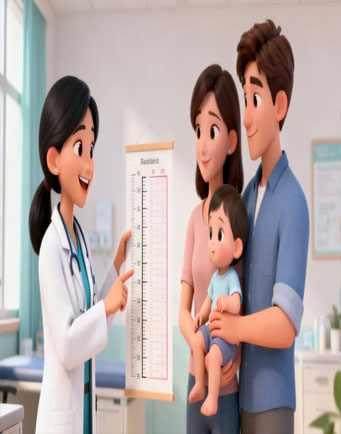
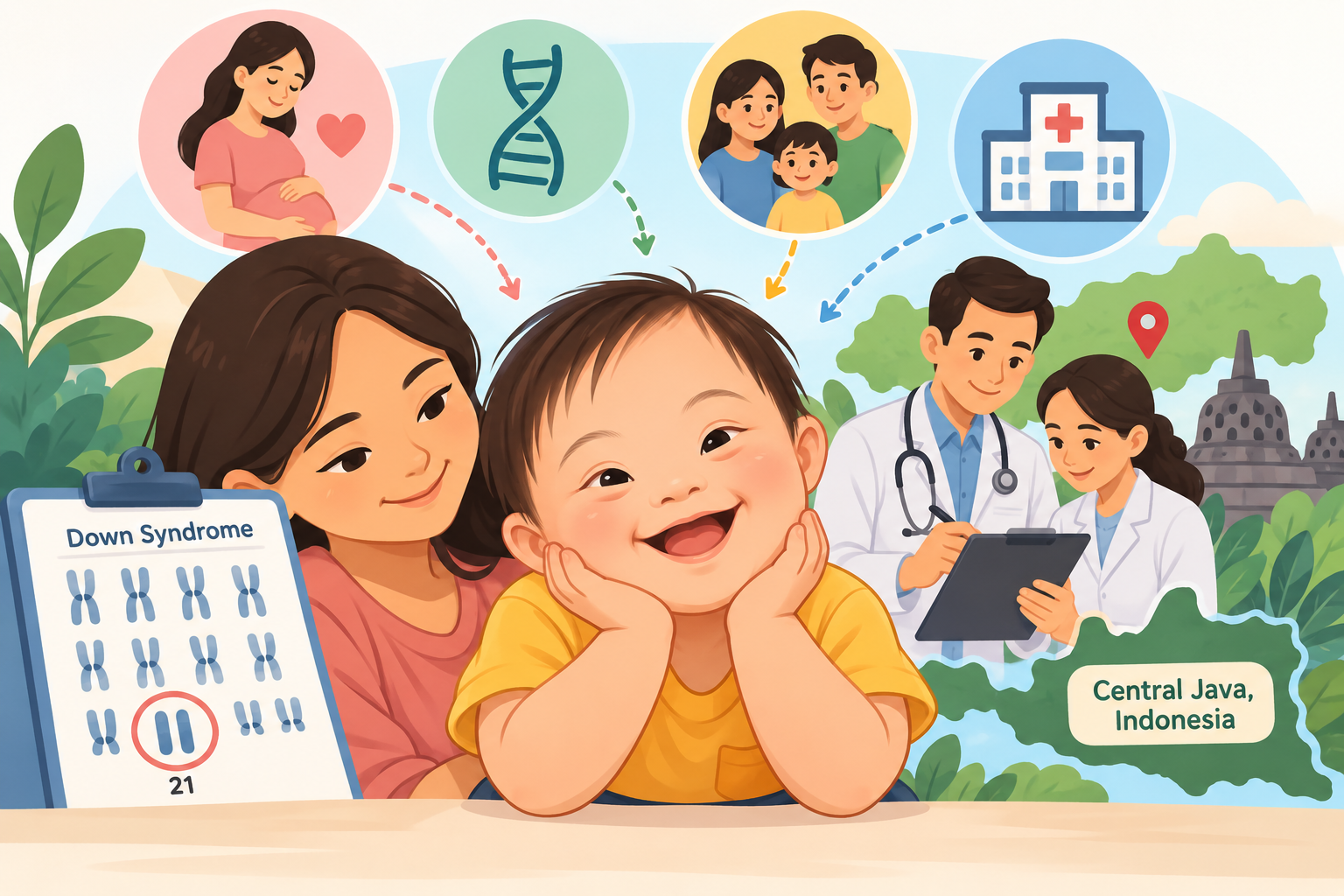
The prevalence of Down syndrome among children aged 24–59 months was detected at 0.12% in 2010, 0.13% in 2013, and 0.21% in 2018, or approximately 1 per 600 live births. The global incidence is estimated at 3,000– 5,000 infants born with Down syndrome each year. Based on CDC data, approximately 6,000 infants are born with Down syndrome (DS) each year, or about 1 in 700 live births. The incidence of DS in the United States (US) increased over the period 2010 2014, rising from 13.7 per 10,000 to 15.7 per 10,000 live births, or 1 in 772 infants born with DS. Early detection of Down syndrome plays a crucial role in improving clinical management and family preparedness. Delayed diagnosis of intellectual disability can cause children to miss the opportunity for early intervention, which can help reduce symptoms as well as behavioral and emotional problems, in addition to resulting in poorer cognitive and adaptive functioning compared with those who receive treatment early. This study aimed to describe the characteristics of children with Down syndrome, maternal characteristics, and the history of birth attendants, birth settings, and modes of delivery in Central Java, Indonesia. Specifically, the study aimed to examine the associations between birth attendant, birth setting, mode of delivery, and the timing of Down syndrome diagnosis in children. A correlational analytical design with a cross-sectional approach was employed to describe the characteristics of children with Down syndrome, maternal characteristics, and birth-related factors, including birth attendant, birth setting, and mode of delivery. The study also examined the associations between these factors and the child’s age at Down syndrome diagnosis. Bivariate analysis was performed using the Chi-square test, while multivariable analysis was conducted using binary logistic regression. The findings showed that the majority of children were male and were aged >5–12 years. Most mothers were aged 20–35 years at the time of delivery. Midwives were the most common birth attendants, spontaneous vaginal delivery was the predominant mode of delivery, and independent midwifery practices were the most frequent birth settings. Most children were diagnosed with Down syndrome during the neonatal period. Among the factors examined, birth attendant showed the strongest statistical association with early diagnosis
Alfaro, H. G. D. C., Gomes Junior, S. C., Sá, R. A. M., & Araujo Júnior, E. (2024). Analysis of Down syndrome newborn outcomes in three neonatal intensive care units in Rio de Janeiro, Brazil. Revista da Associacao Medica Brasileira (1992), 70(3), e20231186. https://doi.org/10.1590/1806-9282.20231186.
Alnoman, A., Baghlaf, H. A., Badeghiesh, A. M., Peeva, M., & Dahan, M. H. (2024). Pregnancy, delivery, and neonatal outcomes among women living with Down syndrome: a matched cohort study, utilizing a population database. Archives of gynecology and obstetrics, 309(6), 2681–2687. https://doi.org/10.1007/s00404-023-07208-0.
Ammar, L., Bird, K., Nian, H., Maxwell-Horn, A., Lee, R., Ding, T., Riddell, C., Gebretsadik, T., Snyder, B., Hartert, T., & Wu, P. (2024). Development and Validation of a Diagnostic Algorithm for Down Syndrome Using Birth Certificate and International Classification of Diseases Codes. Children (Basel, Switzerland), 11(10), 1271. https://doi.org/10.3390/children11101271.
Aprigio, J., de Castro, C. M. L., Lima, M. A. C., Ribeiro, M. G., Orioli, I. M., & Amorim, M. R. (2023). Mothers of children with Down syndrome: a clinical and epidemiological study. Journal of community genetics, 14(2), 189–195. https://doi.org/10.1007/s12687-022-00627-7
Baruwa, O. J., Amoateng, A. Y., & Mkwananzi, S. (2021). Association between type of birth attendants and neonatal mortality: Evidence from a National survey. African health sciences, 21(4), 1870–1876. https://doi.org/10.4314/ahs.v21i4.45.
Cassidy, S. B., & Allanson, J. E. (2010). Management of genetic syndromes. John Wiley & Sons.
Chen, L., Wang, L., Wang, Y., Hu, H., Zhan, Y., Zeng, Z., & Liu, L. (2022). Global, Regional, and National Burden and Trends of Down Syndrome From 1990 to 2019. Frontiers in genetics, 13, 908482. https://doi.org/10.3389/fgene.2022.908482
Chisolm, D. J., Jones, C., Root, E. D., Dolce, M., & Kelleher, K. J. (2020). A Community Development Program and Reduction in High-Cost Health Care Use. Pediatrics, 146(2), e20194053. https://doi.org/10.1542/peds.2019-4053
Coppedè F. (2016). Risk factors for Down syndrome. Archives of toxicology, 90(12), 2917–2929. https://doi.org/10.1007/s00204-016-1843-3.
Anane-Fenin, B., Opoku, D. A., & Chauke, L. (2023). Prevalence, Pattern, and Outcome of Congenital Anomalies Admitted to a Neonatal Unit in a Low-Income Country-a Ten-Year Retrospective Study. Maternal and child health journal, 27(5), 837–849. https://doi.org/10.1007/s10995-023-03591-x
de Graaf, G., Buckley, F., & Skotko, B. G. (2021). Estimation of the number of people with Down syndrome in Europe. European journal of human genetics : EJHG, 29(3), 402–410. https://doi.org/10.1038/s41431-020-00748-y
Hu, H., Dong, L., Bu, Z., Shen, Y., Luo, J., Zhang, H., Zhao, S., Lv, F., & Liu, Z. (2020). miR-23a-3p-abundant small extracellular vesicles released from Gelma/nanoclay hydrogel for cartilage regeneration. Journal of extracellular vesicles, 9(1), 1778883. https://doi.org/10.1080/20013078.2020.1778883
Irwanto I. (2019). A-Z sindrom Down. Airlangga university press.z
Jayashankar, S. S., Nasaruddin, M. L., Hassan, M. F., Dasrilsyah, R. A., Shafiee, M. N., Ismail, N. A. S., & Alias, E. (2023). Non-Invasive Prenatal Testing (NIPT): Reliability, Challenges, and Future Directions. Diagnostics (Basel, Switzerland), 13(15), 2570. https://doi.org/10.3390/diagnostics13152570.
Kementrian Kesehatan Republik Indonesia. (2018). Riset Kesehatan Dasar. http://repository.bkpk.kemkes.go.id/3514/1/Laporan Riskesdas 2018 Nasional.pdf
Krell, K., Witt, M., & Santoro, S. L. (2026). Caregivers' Perspectives on Medical Management and Its Helpfulness in Down Syndrome. American journal of medical genetics. Part A, 200(4), 835–845. https://doi.org/10.1002/ajmga.70006.
Loubersac, J., Michelon, C., Ferrando, L., Picot, M. C., & Baghdadli, A. (2023). Predictors of an earlier diagnosis of Autism Spectrum Disorder in children and adolescents: a systematic review (1987-2017). European child & adolescent psychiatry, 32(3), 375–393. https://doi.org/10.1007/s00787-021-01792-9.
Malone, F. D., Canick, J. A., Ball, R. H., Nyberg, D. A., Comstock, C. H., Bukowski, R., Berkowitz, R. L., Gross, S. J., Dugoff, L., Craigo, S. D., Timor-Tritsch, I. E., Carr, S. R., Wolfe, H. M., Dukes, K., Bianchi, D. W., Rudnicka, A. R., Hackshaw, A. K., Lambert-Messerlian, G., Wald, N. J., D'Alton, M. E., … First- and Second-Trimester Evaluation of Risk (FASTER) Research Consortium (2005). First-trimester or second-trimester screening, or both, for Down's syndrome. The New England journal of medicine, 353(19), 2001–2011. https://doi.org/10.1056/NEJMoa043693
Monier, I., Lelong, N., Benachi, A., Jouannic, J. M., Khoshnood, B., & Zeitlin, J. (2023). Postnatal diagnosis of congenital anomalies despite active systematic prenatal screening policies: a population-based registry study. American journal of obstetrics & gynecology MFM, 5(11), 101170. https://doi.org/10.1016/j.ajogmf.2023.101170
Montiel-Nava, C., Chacín, J. A., & González-Ávila, Z. (2017). Age of diagnosis of autism spectrum disorder in Latino children: The case of Venezuelan children. Autism : the international journal of research and practice, 21(5), 573–580. https://doi.org/10.1177/1362361317701267.
Muhammad Zain, M. Z. H., Nasir, A., Yaacob, N. M., & Ibrahim, N. R. (2025). Incidence of Newborns with Down Syndrome and Factors Associated with Their Length of Hospital Stay in Hospital Pakar Universiti Sains Malaysia. The Malaysian journal of medical sciences : MJMS, 32(4), 203–211. https://doi.org/10.21315/mjms-10-2024-838.
Musdalipa, M., Wulandari, R., & Maddeppungeng, M. (2021). Maternal Age Distribution of Down Syndrome at Pediatric Growth and Development Clinic, Wahidin Sudirohusodo Hospital in Makassar for the period of 2015-2019. Green Medical Journal, 3(2), 73-80. https://doi.org/10.33096/gmj.v3i2.88
Noia, G., Pasciuto, T., Ria, F., Pontecorvi, A., Sacco, M., Teveroni, E., Genuardi, M., Mauro, F., Spina, P., Spina, E., Castagna, G., Visconti, D., Lanzone, A., & De Santis, M. (2026). A New Hypothesis on the Etiology of Down Syndrome: The Role of Anti-Zona Pellucida Antibodies as an Age-Independent Factor. International journal of molecular sciences, 27(2), 991. https://doi.org/10.3390/ijms27020991.
Olorunsaiye, C. Z., Yusuf, K. K., Harris, A. M., & Gaikwad, S. (2020). Association between birth attendant and early newborn care in Senegal. Midwifery, 90, 102804. https://doi.org/10.1016/j.midw.2020.102804.
Owen, L., Steel, A., Goffe, K., Pleming, J., & Sampson, E. L. (2022). A multidisciplinary simulation programme to improve advance care planning skills and engagement across primary and secondary care. Clinical medicine (London, England), 22(1), 51–57. https://doi.org/10.7861/clinmed.2021-0240
Song, Y., Jieping, S., Tianshu, Z., Zhijun, Z., Jingxuan, Z., & Bo, W. (2022). Incidence of Down Syndrome by maternal age in Chinese population. Frontiers in genetics, 13, 980627. https://doi.org/10.3389/fgene.2022.980627.
Tenorio D, M., Sagner-Tapia, J., Garibaldi, R., & Totsika, V. (2025). Your baby has down syndrome: a reflexive thematic analysis of breaking the news to parents. BMC pregnancy and childbirth, 25(1), 536. https://doi.org/10.1186/s12884-025-07665-2.
Utari, A., Cayami, F. K., Rahardjo, T. A., Sabatini, S. E., Ulvyana, V., & Winarni, T. I. (2024). Critical issue in the identification of Down syndrome and its problems in Central Java, Indonesia: The fact of needing health care and better management. Intractable & rare diseases research, 13(2), 121–125. https://doi.org/10.5582/irdr.2023.01103
Utari, A., Cayami, F. K., Rahardjo, T. A., Sabatini, S. E., Ulvyana, V., & Winarni, T. I. (2024). Critical issue in the identification of Down syndrome and its problems in Central Java, Indonesia: The fact of needing health care and better management. Intractable & rare diseases research, 13(2), 121–125. https://doi.org/10.5582/irdr.2023.01103.
Ye, E., Wu, E., & Han, R. (2025). Global, regional, and national impact of Down syndrome on child and adolescent mortality from 1980 to 2021, with projections to 2050: a cross-sectional study. Frontiers in public health, 13, 1554589. https://doi.org/10.3389/fpubh.2025.1554589
Zevanya, E., Indrarto, W., & Lestari, D. (2024). Maternal age increases the risk of Down syndrome: a case-control study in Yogyakarta, Indonesia. Berkala Ilmiah Kedokteran Duta Wacana, 9(1). https://doi.org/10.21460/bikdw.v9i1.636
Copyright (c) 2026 JURNAL INFO KESEHATAN

This work is licensed under a Creative Commons Attribution-NonCommercial-ShareAlike 4.0 International License.
Copyright notice
Ownership of copyright
The copyright in this website and the material on this website (including without limitation the text, computer code, artwork, photographs, images, music, audio material, video material and audio-visual material on this website) is owned by JURNAL INFO KESEHATAN and its licensors.
Copyright license
JURNAL INFO KESEHATAN grants to you a worldwide non-exclusive royalty-free revocable license to:
- view this website and the material on this website on a computer or mobile device via a web browser;
- copy and store this website and the material on this website in your web browser cache memory; and
- print pages from this website for your use.
- All articles published by JURNAL INFO KESEHATAN are licensed under the Creative Commons Attribution 4.0 International License. This permits anyone to copy, redistribute, remix, transmit and adapt the work provided the original work and source is appropriately cited.
JURNAL INFO KESEHATAN does not grant you any other rights in relation to this website or the material on this website. In other words, all other rights are reserved.
For the avoidance of doubt, you must not adapt, edit, change, transform, publish, republish, distribute, redistribute, broadcast, rebroadcast or show or play in public this website or the material on this website (in any form or media) without appropriately and conspicuously citing the original work and source or JURNAL INFO KESEHATAN prior written permission.
Permissions
You may request permission to use the copyright materials on this website by writing to [email protected].
Enforcement of copyright
JURNAL INFO KESEHATAN takes the protection of its copyright very seriously.
If JURNAL INFO KESEHATAN discovers that you have used its copyright materials in contravention of the license above, JURNAL INFO KESEHATAN may bring legal proceedings against you seeking monetary damages and an injunction to stop you using those materials. You could also be ordered to pay legal costs.
If you become aware of any use of JURNAL INFO KESEHATAN copyright materials that contravenes or may contravene the license above, please report this by email to [email protected]
Infringing material
If you become aware of any material on the website that you believe infringes your or any other person's copyright, please report this by email to [email protected].