Formulation Strategy to Prevent Sticking in Calcium Carbonate–Cholecalciferol Chewable Tablets: The Role of Citric Acid

Downloads
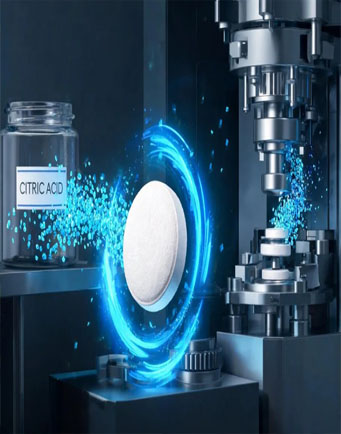
The sticking phenomenon is a critical issue in the production of calcium carbonate–cholecalciferol (vitamin D3) chewable tablets, primarily driven by the hygroscopicity and reactivity of citric acid, which is used as a flavor-masking agent. This study aims to evaluate and determine the optimal method for mitigating sticking by modifying citric acid excipients using two approaches: granulation with mannitol (F1: 0.5%, F2: 1%) and coating with HPMC (F3: 0.5%, F4: 1%). The evaluation was conducted on the properties of the granule mass and quantitatively measured the percentage of sticking in industrial-scale modifications for 24 hours. The results showed that the control formula (F0), without modification, had the lowest sticking percentage (10.88%) and the highest moisture content (3.36%), as indicated by a "passable" flow property with a compressibility index of 21.47%. The 1% HPMC coating modification method (F4) was successful in eliminating stickiness to 0%, supported by moisture-control data (2.25%) and a significant improvement in powder-flow properties to “fair,” with a compressibility index of 17.06%. Although the 1% mannitol granulation method (F2) is relatively effective in reducing stickiness (0.85%), the 1% HPMC coating (F4) is more effective at physically isolating citric acid. This study concludes that the HPMC coating method is superior to the granulation method for physically isolating citric acid, yielding stable, non-sticking calcium carbonate–cholecalciferol chewable tablets.
Abaci, A., Gedeon, C., Kuna, A., & Guvendiren, M. (2021). Additive manufacturing of oral tablets: Technologies, materials and printed tablets. Pharmaceutics, 13(2), 156. https://doi.org/10.3390/pharmaceutics13020156
Adeleye, O., Bamiro, O. A., Albalawi, D. A., Alotaibi, A. S., Iqbal, H., Sanyaolu, S., … Menaa, F. (2022). Characterizations of alpha-cellulose and microcrystalline cellulose isolated from Cocoa Pod Husk as a potential pharmaceutical excipient. Materials, 15(17), 5992. https://doi.org/10.3390/ma15175992
Akhtar, S., & Dev, P. (2017). Formulation and evaluation of chewable multivitamin tablet. International Journal of Current Pharmaceutical Research, 9, 61–64. https://doi.org/10.22159/ijcpr.2017v9i4.20958
Al-Hakim, N. A., Fauziyyah, S. A. N., Purnamasari, N., & Faramayuda, F. (2024). Formulation and physical evaluation of Orthosiphon aristatus leaf extract granule preparation as herbal beverage candidate. Majalah Obat Tradisional, 29(3), 286–294. https://doi.org/10.22146/mot.91009
Al-Hakim, N. A., Ratih, H., & Sabrilla, N. (2025). Formulation and physical evaluation of Stevia granule preparations as natural sweetener with the incorporation of Polyvinylpyrrolidone (PVP) as binder. JPS, 8(2), 827–836. https://doi.org/10.36490/journal-jps.com.v8i2.661
Aleti, R., & Murthy, K. V. R. (2023). Development and characterization of chronotherapeutic tablets of sacubitril-valsartan supramolecular complex using hupu gum and lannea gum by compression coating. Journal of Applied Pharmaceutical Science, 13(7), 193-203. https://doi.org/10.7324/JAPS.2023.120714
Atanaskova, E., Kostovski, D., & Anevska-Stojanovska, N. (2020). Investigation of the influence of critical process parameters in roller compaction process on physical properties of granules and tablets using design of experiments. Arhiv Za Farmaciju, 70(1), 34–53. https://doi.org/10.5937/arhfarm2001034A
Aultons, M. E., & Taylor, K. M. G. (2022). Aulton’s pharmaceutics: The design and manufacture of medicines 6th ed. London, United Kingdom: Churchill Livingstone, Elsevier.
Badawi, A., Hegazy, M. M., Louis, D., & Eldegwy, M. A. (2017). Solving manufacturing problems for L-carnitine-L-tartrate to improve the likelihood of successful product scale-up. Acta Pharmaceutica, 67(4), 511–525. https://doi.org/10.1515/acph-2017-0033
Carugo, S., Vescini, F., Giusti, A., Mauro, G. L., Tafaro, L., Festuccia, F., ... & Rossini, M. (2024). The essential role of combined calcium and vitamin D supplementation in the osteoporosis scenario in italy: Expert opinion paper. Archives of Osteoporosis, 19(1), 99. https://doi.org/10.1007/s11657-024-01451-x
Chanwetprasat, P., Seangarun, C., Seesanong, S., Boonchom, B., Laohavisuti, N., Boonmee, W., & Rungrojchaipon, P. (2025). Effect of Citric Acid Concentration on the Transformation of Aragonite CaCO3 to Calcium Citrate Using Cockle Shells as a Green Calcium Source. Materials, 18(9), 2003. https://doi.org/10.3390/ma18092003
Chen, F. C., Liu, W. J., Zhu, W. F., Yang, L. Y., Zhang, J. W., Feng, Y., ... & Li, Z. (2022). Surface modifiers on composite particles for direct compaction. Pharmaceutics, 14(10), 2217. https://doi.org/10.3390/pharmaceutics14102217
Chun, M., Kim, J. Y., Park, E., & Choi, D. (2021). Development of a robust control strategy for fixed-dose combination bilayer tablets with integrated quality by design, statistical, and process analytical technology approach. Pharmaceutics, 13(9), 1443. https://doi.org/10.3390/pharmaceutics13091443
Fara, D. A., Al-Hmoud, L., Rashid, I., Chowdhry, B., & Badwan, A. (2020). Understanding the performance of a novel direct compression excipient comprising roller compacted chitin. Marine Drugs, 18(2), 115. https://doi.org/10.3390/md18020115
Gawade, N. L., & Shendge, R. S. (2020). A review on chewable tablet. Journal of Emerging Technologies and Innovative Research, 7(3), 342-353. https://doi.org/10.52783/jchr.v14.i6.7573
Ismail, A., El-Biyally, E., & Sakran, W. (2023). An innovative approach for formulation of rutin tablets targeted for colon cancer treatment. AAPS PharmSciTech, 24(2), 1–14. https://doi.org/10.1208/s12249-023-02518-7
Kang, C. Y. X., Chow, K., Lui, Y. S., Salome, A., Boit, B., Lefevre, P., … Heng, P. W. S. (2024). Mannitol-coated hydroxypropyl methylcellulose as a directly compressible controlled release excipient for moisture-sensitive drugs: a stability perspective. Pharmaceuticals, 17(9), 1167. https://doi.org/10.3390/ph17091167
Kementerian Kesehatan Republik Indonesia. (2020). Farmakope Indonesia edisi VI. Jakarta: Kementrian Kesehatan Indonesia.
Kotsur, Y. M., Terenteva, O. A., Flisyuk, E. V, & Narkevich, I. (2024). Application of press-coatings for the development of prolonged release tablets based on hygroscopic substances. Drug Development and Registration, 13(4), 113-120. https://doi.org/10.33380/2305-2066-2024-13-4-1952
Koumbogle, K., Gitzhofer, F., & Abatzoglou, N. (2022). Moisture transport coefficients determination on a model pharmaceutical tablet. Processes, 10(2), 254. https://doi.org/10.3390/pr10020254
Lambros, M., Tran, T., Fei, Q., & Nicolaou, M. (2022). Citric acid: A multifunctional pharmaceutical excipient. Pharmaceutics, 14(5), 972. https://doi.org/10.3390/pharmaceutics14050972
Lute, S. V., Dhenge, R. M., & Salman, A. D. (2018). Twin screw granulation: effects of properties of primary powders. Pharmaceutics, 10(2), 68. https://doi.org/10.3390/pharmaceutics10020068
Medarević, D., Djuriš, J., Krkobabić, M., & Ibrić, S. (2021). Improving tableting performance of lactose monohydrate by fluid-bed melt granulation co-processing. Pharmaceutics, 13(12), 2165. https://doi.org/10.3390/pharmaceutics13122165
Mititelu, M., Moroșan, E., Nicoară, A. C., Secăreanu, A. A., Musuc, A. M., Atkinson, I., ... & Balaci, T. D. (2022). Development of immediate release tablets containing calcium lactate synthetized from Black Sea mussel shells. Marine drugs, 20(1), 45. https://doi.org/10.3390/md20010045
Nakamura, S., Otsuka, N., Yoshino, Y., Sakamoto, T., & Yuasa, H. (2016). Predicting the occurrence of sticking during tablet production by shear testing of a pharmaceutical powder. Chemical and Pharmaceutical Bulletin, 64(5), 512–516. https://doi.org/10.1248/cpb.c15-00992
Nidhu, M. S., Sniktha, V. R., Benny, L., Thomas, J., Ajay, A., & Ramaswamy, K. P. (2021). Degradation kinetics of alkali-activated mortar in aggressive citric acid environment. IOP Conference Series: Materials Science and Engineering, 989(1), 012007. https://doi.org/10.1088/1757-899X/989/1/012007
Nyamweya, N. N. (2021). Applications of polymer blends in drug delivery. Future Journal of Pharmaceutical Sciences, 7(1), 18. https://doi.org/10.1186/s43094-020-00167-2
Nyarko, S., Ofori-Kwakye, K., Johnson, R., Kuntworbe, N., & Yar, D. D. (2024). Investigating the Presence of Falsified and Poor‐Quality Fixed‐Dose Combination Artemether‐Lumefantrine Pharmaceutical Dosage Forms in Kumasi, Ghana. Advances in Pharmacological and Pharmaceutical Sciences, 2024(1), 2650540. https://doi.org/10.1155/2024/2650540
Olowofoyeku, A. E., Aremu, A. K., Olorunnisola, A., Olowofoyeku, A. E., Mendez, J. R. V., & Adekanmi, D. G. (2025). Tunable Hydrophobicity and Photoluminescence in Polystyrene-Calcium Carbonate Composites with Citric Acid-Induced Porosity. Engineering Innovations, 14, 1–13. https://doi.org/10.4028/p-V2Z9mr
Ortiz, A. C., Carrasco-Rojas, J., Peñaloza, S., Simirgiotis, M. J., Rubio-Quiroz, L., Ruiz, D., ... & Arriagada, F. (2025). Influence of an Antioxidant Nanomaterial on Oral Tablet Formulation: Flow Properties and Critical Quality Attributes. Antioxidants, 14(7), 829. https://doi.org/10.3390/antiox14070829
Pagire, S. K., Seaton, C., & Paradkar, A. (2020). Improving stability of effervescent products by co-crystal formation: a novel application of crystal engineered citric acid. Crystal Growth & Design, 20(7), 4839–4844. https://doi.org/10.1021/acs.cgd.0c00616
Palacios, C., Cormick, G., Hofmeyr, G., Garcia-Casal, M., Peña-Rosas, J. P., & Betrán, A. (2020). Calcium‐fortified foods in public health programs: considerations for implementation. Annals of the New York Academy of Sciences, 1485, 3–21. https://doi.org/10.1111/nyas.14495
Peddapatla, R. V., Sheridan, G., Slevin, C., Swaminathan, S., Browning, I., O’reilly, C., ... & Crean, A. M. (2021). Process model approach to predict tablet weight variability for direct compression formulations at pilot and production scale. Pharmaceutics, 13(7), 1033. https://doi.org/10.3390/pharmaceutics13071033
Poka, M., Milne, M., Wessels, A., & Aucamp, M. (2023). Sugars and polyols of natural origin as carriers for solubility and dissolution enhancement. Pharmaceutics, 15(11), 2557. https://doi.org/10.3390/pharmaceutics15112557
Ratih, H., Pratiwi, G. K., Alatas, F., Agustin, M., & Saraswati, B. D. (2022). Isoniazid microencapsulation with HPMCP HP-50 and HPMCP HP- 55 (2:3) coating using solvent evaporation method. Indonesian Journal of Pharmaceutical Science and Technology, 9(2), 114. https://doi.org/10.24198/ijpst.v9i2.36678
Rocha, H., Augusto, R. S., Prado, L. D., & Carvalho, E. (2019). Characterization of nimesulide and development of immediate release tablets. Eclética Química Journal, 44(3), 20–35. https://doi.org/10.26850/1678-4618eqj.v44.3.2019.p20-35
Rodríguez-Pombo, L., Awad, A., Basit, A. W., Alvarez-Lorenzo, C., & Goyanes, A. (2022). Innovations in chewable formulations: the novelty and applications of 3D printing in drug product design. Pharmaceutics, 14(8), 1732. https://doi.org/10.3390/pharmaceutics14081732
Rosch, M., Lucas, K., Al-Gousous, J., Pöschl, U., & Langguth, P. (2021). Formulation and characterization of an effervescent hydrogen-generating tablet. Pharmaceuticals, 14(12), 1327. https://doi.org/10.3390/ph14121327
Shah, D. S., Moravkar, K., Jha, D., Lonkar, V., Amin, P. D., & Chalikwar, S. (2023). A concise summary of powder processing methodologies for flow enhancement. Heliyon, 9(6). https://doi.org/10.1016/j.heliyon.2023.e16498
Shahrbabaki, M. F., Lavasani, A. S., Zand, N., Nateghi, L., & Eshaghi, M. (2025). Designing an optimized nanocomposite film comprising hydroxypropyl methylcellulose, nanoclay, and dill essential oil to extend the shelf life of eggs. International Journal of Food Science, 2025(1), 6633069. https://doi.org/10.1155/ijfo/6633069
Sharma, S. K., Singh, A.-K., Bhandari, A., Singh, S., & Singh, S. (2020). Development and evaluation of chewable tablets of calcium and vitamin D. Asian Journal of Pharmaceutical Research and Development, 8(3), 232–234. https://doi.org/10.22270/ajprd.v8i3.704
Stanojević, G., Medarević, D., Adamov, I., Pevsić, N., Kovacevic, J., & Ibrić, S. (2020). Tailoring atomoxetine release rate from DLP 3D-printed tablets using artificial neural networks: Influence of tablet thickness and drug loading. Molecules, 26(1), 111. https://doi.org/10.3390/molecules26010111
Takeuchi, H. (2022). Contribution of particle design research to the development of patient-centric dosage forms. KONA Powder and Particle Journal, 39, 150–175. https://doi.org/10.14356/kona.2022017
Vlad, R. A., Pintea, A., Pintea, C., Rédai, E. M., Antonoaea, P., Bîrsan, M., & Ciurba, A. (2025). Hydroxypropyl methylcellulose—a key excipient in pharmaceutical drug delivery systems. Pharmaceutics, 17(6), 784. https://doi.org/10.3390/pharmaceutics17060784
Wang, Y., Cao, J., Zhao, X., Liang, Z., Qiao, Y., Luo, G., & Xu, B. (2022). Using a material library to understand the change of tabletability by high shear wet granulation. Pharmaceutics, 14(12), 2631. https://doi.org/10.3390/pharmaceutics14122631
Yang, Q., Yuan, F., Xu, L., Yan, Q., Yang, Y., Wu, D., ... & Yang, G. (2019). An update of moisture barrier coating for drug delivery. Pharmaceutics, 11(9), 436. https://doi.org/10.3390/pharmaceutics11090436
Zheng, X., Wu, F., Hong, Y., Shen, L., Lin, X., & Feng, Y. (2019). Improvements in sticking, hygroscopicity, and compactibility of effervescent systems by fluid-bed coating. RSC Advances, 9, 31594–31608. https://doi.org/10.1039/c9ra05884b
Copyright (c) 2026 JURNAL INFO KESEHATAN

This work is licensed under a Creative Commons Attribution-NonCommercial-ShareAlike 4.0 International License.
Copyright notice
Ownership of copyright
The copyright in this website and the material on this website (including without limitation the text, computer code, artwork, photographs, images, music, audio material, video material and audio-visual material on this website) is owned by JURNAL INFO KESEHATAN and its licensors.
Copyright license
JURNAL INFO KESEHATAN grants to you a worldwide non-exclusive royalty-free revocable license to:
- view this website and the material on this website on a computer or mobile device via a web browser;
- copy and store this website and the material on this website in your web browser cache memory; and
- print pages from this website for your use.
- All articles published by JURNAL INFO KESEHATAN are licensed under the Creative Commons Attribution 4.0 International License. This permits anyone to copy, redistribute, remix, transmit and adapt the work provided the original work and source is appropriately cited.
JURNAL INFO KESEHATAN does not grant you any other rights in relation to this website or the material on this website. In other words, all other rights are reserved.
For the avoidance of doubt, you must not adapt, edit, change, transform, publish, republish, distribute, redistribute, broadcast, rebroadcast or show or play in public this website or the material on this website (in any form or media) without appropriately and conspicuously citing the original work and source or JURNAL INFO KESEHATAN prior written permission.
Permissions
You may request permission to use the copyright materials on this website by writing to [email protected].
Enforcement of copyright
JURNAL INFO KESEHATAN takes the protection of its copyright very seriously.
If JURNAL INFO KESEHATAN discovers that you have used its copyright materials in contravention of the license above, JURNAL INFO KESEHATAN may bring legal proceedings against you seeking monetary damages and an injunction to stop you using those materials. You could also be ordered to pay legal costs.
If you become aware of any use of JURNAL INFO KESEHATAN copyright materials that contravenes or may contravene the license above, please report this by email to [email protected]
Infringing material
If you become aware of any material on the website that you believe infringes your or any other person's copyright, please report this by email to [email protected].